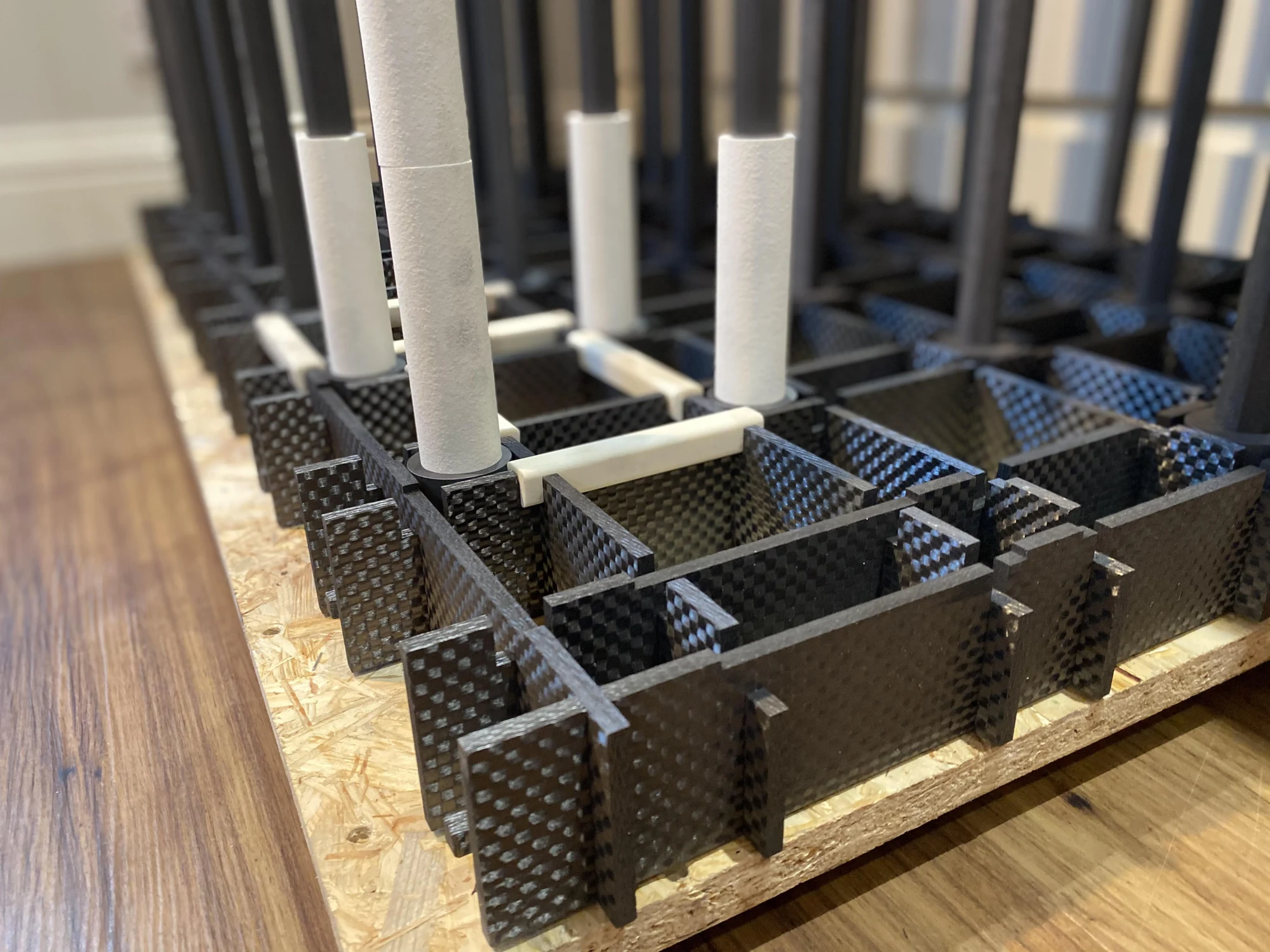
Vacuum & Inert Atmosphere Furnace Fixtures
Custom CFC & Graphite Furnace Fixtures
Custom-Engineered Furnace Fixtures for Vacuum & Inert Atmosphere Heat Treatment
Quest Engineering specialises in custom-designed CFC and graphite furnace fixtures for vacuum and inert atmosphere heat treatment applications. We supply complete engineered assemblies tailored to customer-specific loading requirements, or manufacture directly to customer drawings.
Our fixtures can incorporate integrated technical ceramic contact components and refractory-metal hardware where required to address workpiece compatibility, structural support and operating conditions.
Request a QuoteWhy Choose CFC Furnace Fixtures?
Carbon fibre composite furnace fixtures — also known as carbon-carbon composite fixtures — combine carbon fibres with a carbon matrix. For suitable vacuum and inert processes, this material offers an alternative to conventional metallic heat treatment fixtures.
The benefit depends on the selected material grade, fixture design, furnace and complete processing cycle. A lighter fixture does not automatically produce a faster cycle or a higher permissible load.
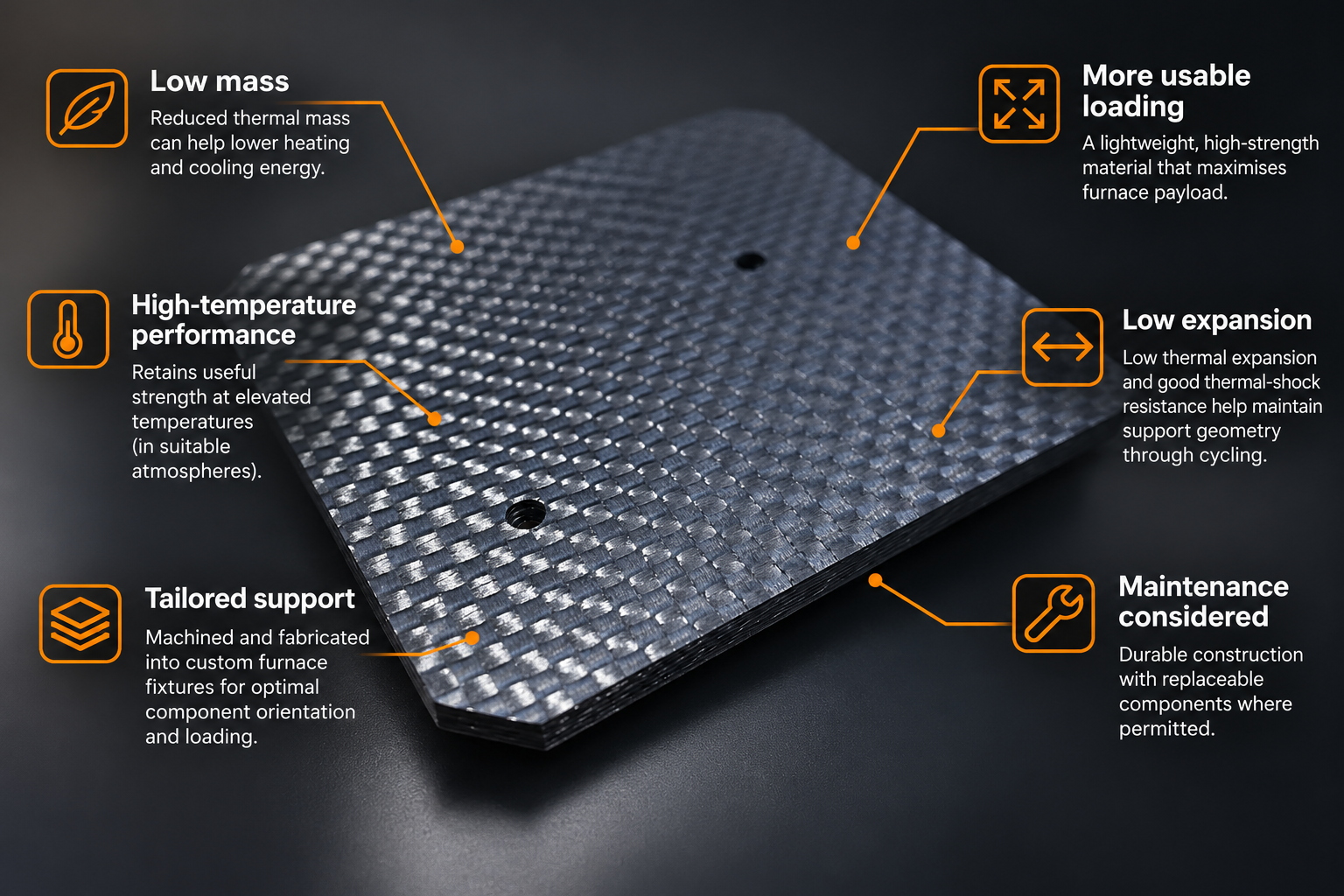
Low mass. Less material to heat.
Lower fixture mass can reduce the thermal mass carried through each cycle and potentially reduce heating and cooling energy requirements. Whole-furnace savings depend on the load, insulation and operating cycle.
More scope for useful loading.
Where fixture weight limits the available furnace payload, lighter supports may release capacity for workpieces. Spacing, heat transfer and furnace load limits still govern loading density.
High-temperature structural performance.
Suitable CFC grades retain useful mechanical performance at elevated temperatures in appropriate atmospheres. Fibre orientation, connections, support span and deflection must be evaluated together.
Low expansion. Stable support geometry.
Low thermal expansion and thermal-shock resistance can help maintain support positions through repeated heating and cooling, with potential reductions in distortion compared with an appropriate metallic fixture.
Support tailored to the workpiece.
Custom support positions and open configurations create opportunities to optimise component orientation, loading density and access for the processing medium.
Maintenance considered from the outset.
Dimensional stability and replaceable components may offer service-life and maintenance benefits. Handling damage, oxidation and contact wear remain relevant; no universal lifetime advantage is assumed.
Custom-Engineered Around Your Components and Process
Every furnace fixture is developed around the components being processed, their material and geometry, the required loading arrangement and the furnace operating conditions.
Quest Engineering can supply complete fixture assemblies designed for a specific application or manufacture directly to existing customer drawings. Fixture construction, support geometry, material selection and workpiece contact arrangements are considered together for the required thermal processing cycle.
Racks, trays, grids, frames and carriers are possible configurations within one custom-engineered offering, rather than separate products.
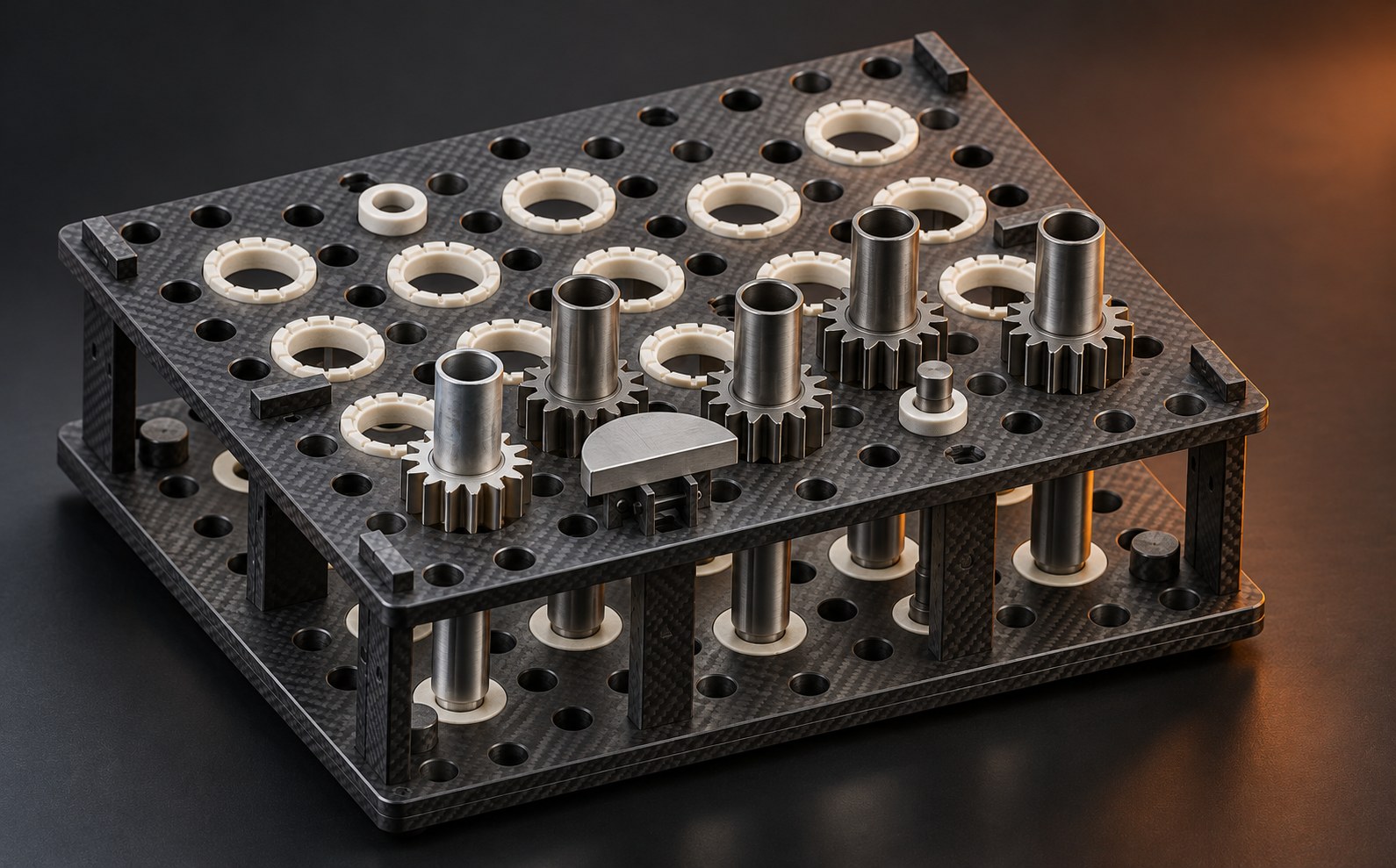
Geometry & loading
Workpiece geometry, orientation, spacing and loading density determine the support layout and distribution of the fixture load.
Structure & furnace envelope
Support positions, span and deflection are assessed alongside furnace working-zone dimensions, hearth rails and available clearances.
Process & interfaces
Temperature, atmosphere, thermal expansion and cycling influence material selection and workpiece contact compatibility.
Handling & assembly
Manual or automated handling, lifting points and assembly connections are considered alongside maintenance access.
CFC Furnace Fixtures with Integrated Ceramic Components
Where direct contact between metallic workpieces and carbon-based fixture materials may cause undesirable reactions, contamination or sticking, Quest Engineering can incorporate technical ceramic contact components into custom CFC and graphite assemblies.
These components provide separation between the workpiece and the underlying carbon structure, with the contact material selected according to the workpiece alloy, processing temperature, furnace atmosphere and loading conditions. Common options include alumina and boron nitride, with alternative ceramics considered where appropriate.
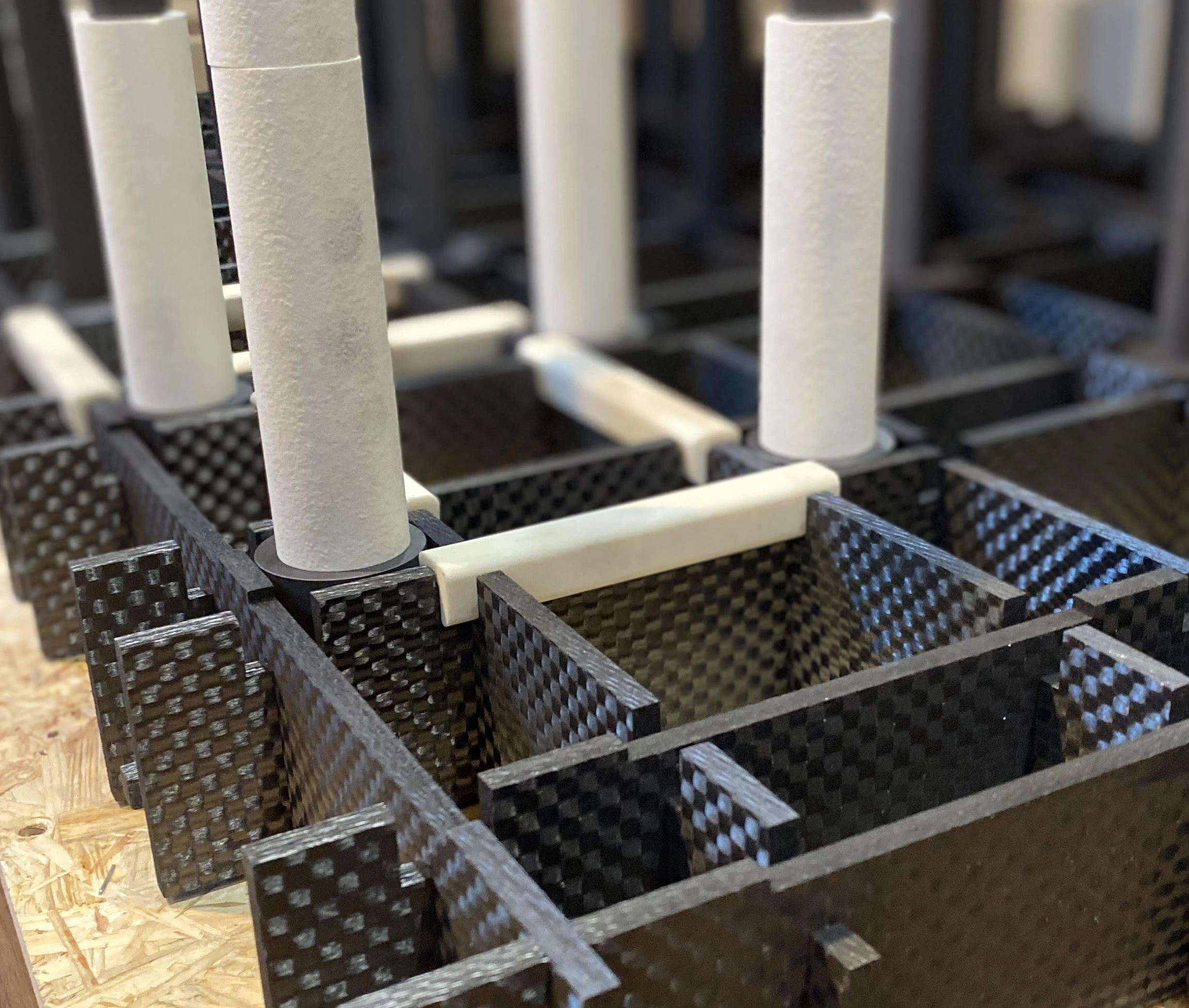
Dedicated workpiece contact surfaces
Ceramic supports, sleeves or spacers position the workpiece on a selected contact material instead of relying on direct carbon-to-metal contact.
Replaceable interfaces
Where the construction permits, individual ceramic contact components can be inspected and replaced without replacing the complete carbon support structure.
A process-specific material combination
Contact pressure, differential expansion and the full thermal cycle must be assessed for both the ceramic component and its CFC or graphite support.
Contacts or coatings — assessed, not assumed
Integrated contacts provide discrete separation at designed support locations. Suitable surface coatings offer a different barrier approach; wear, continuity, inspection and renewal requirements must be evaluated for the process.
Ceramic contacts do not universally prevent carburisation, carbon transfer, sticking or chemical reactions. Atmosphere-mediated transfer and reactions away from the contact points may still occur.
Materials & Construction
Structural materials, workpiece contacts and assembly hardware are selected together. These materials have different roles and are not interchangeable without an application-specific assessment.
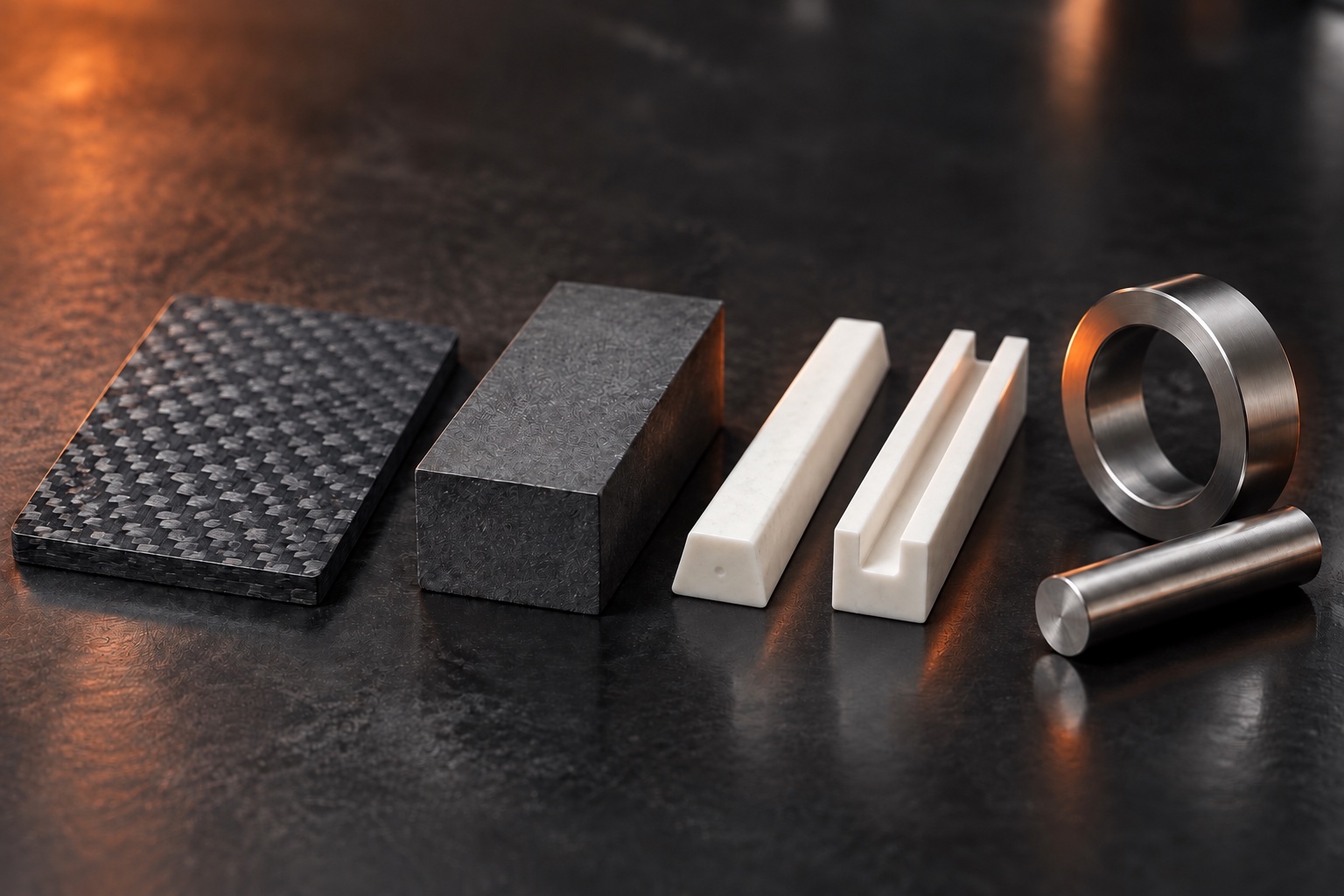
CFC / carbon-carbon composites
Suitable structural fixture components and load-bearing elements in appropriate furnace conditions. Material grade, fibre direction and joint design influence structural performance.
Graphite
Supports, structural components, appropriate contact components and other furnace hardware. Direct workpiece contact requires a compatibility assessment.
Technical ceramics
Alumina, boron nitride and other suitable ceramics for contact separation, spacers and insulating or supporting components, selected for the actual alloy and thermal cycle.
Refractory metals
Molybdenum and other suitable refractory metals for fasteners, connections and structural components where the atmosphere, temperature and workpiece requirements permit.
Furnace Processes & Compatibility
Vacuum furnace fixtures and CFC furnace tooling must be assessed against the complete cycle, including loading, heating, cooling, quenching and unloading. A suitable furnace atmosphere during the hold does not establish compatibility during every other stage.
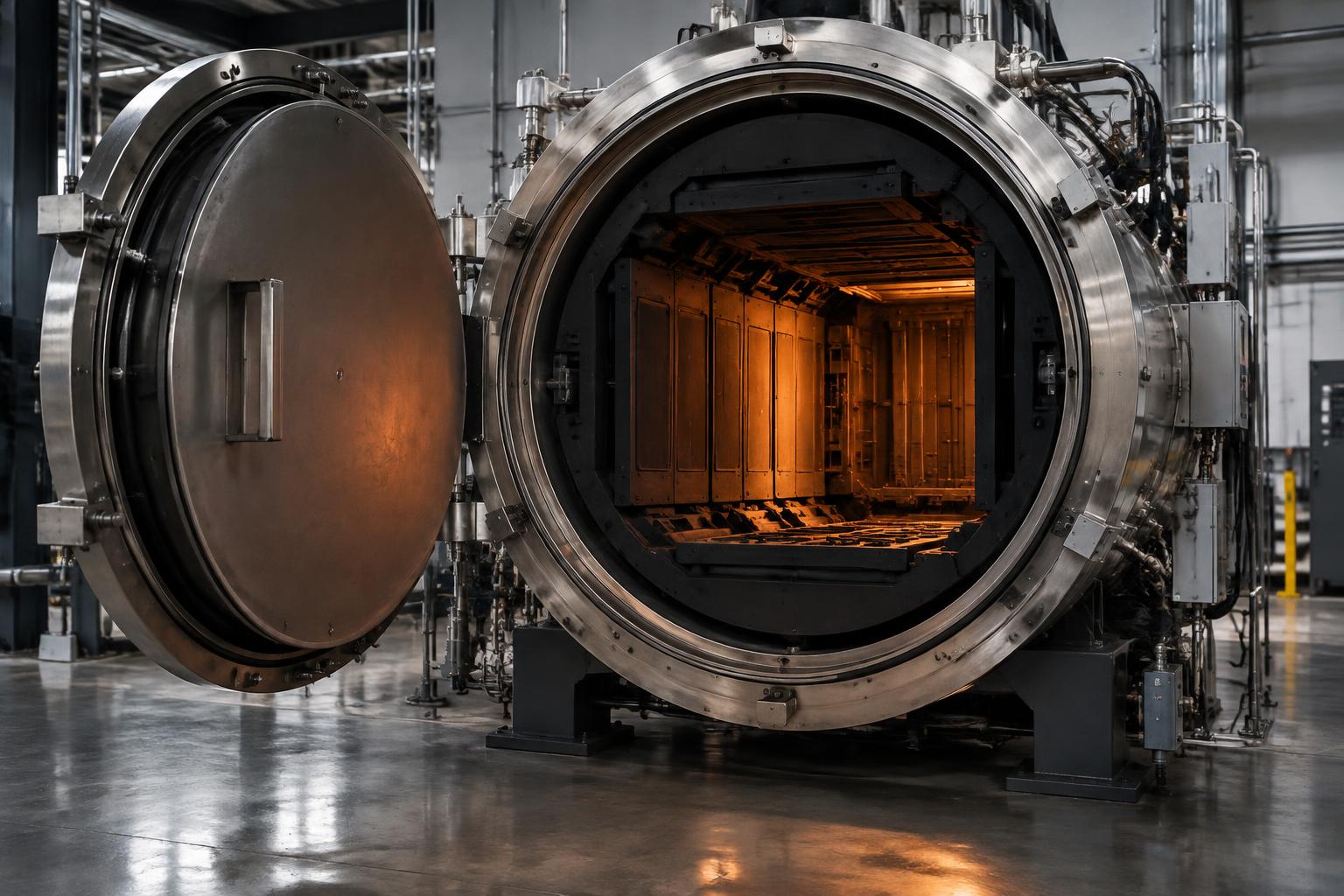
Vacuum & suitable inert atmospheres
The primary applications for these fixtures. Residual oxygen, moisture, gas purity, leaks and the workpiece chemistry still require consideration.
Low-pressure carburising & controlled atmospheres
Potential applications only where the selected carbon grade, process chemistry and complete cycle are compatible. Gas carburising and nitriding are not assumed suitable.
Quenching & handling
Assess cooling rates, thermal gradients, support loads and quench-medium compatibility. Suitability for gas quenching does not establish suitability for oil quenching; media uptake and contamination require separate evaluation.
Oxidation limitations
CFC and graphite are not generally suitable for high-temperature oxidising atmospheres. Hot exposure to air or moisture can degrade carbon structures; no universal safe exposure temperature is specified.
Carbon transfer & contact reactions
Workpiece alloys can react with carbon-based supports, potentially causing carbon pickup, sticking or local reaction products. Temperature, atmosphere, contact pressure and exposure time affect the risk.
Coatings, impregnation & isolation
Application-specific coatings, impregnated material grades or ceramic contact isolation may be considered. Their integrity and durability must be verified; these measures do not establish blanket compatibility.
Confirm the selected grade and contact materials with the relevant process requirements and representative trials before committing to production use.
Information Required for Your Furnace Fixture Project
The following information helps assess a custom fixture requirement and develop an appropriate support and loading arrangement. This is an information checklist only; online quotation submissions and drawing uploads remain unavailable.
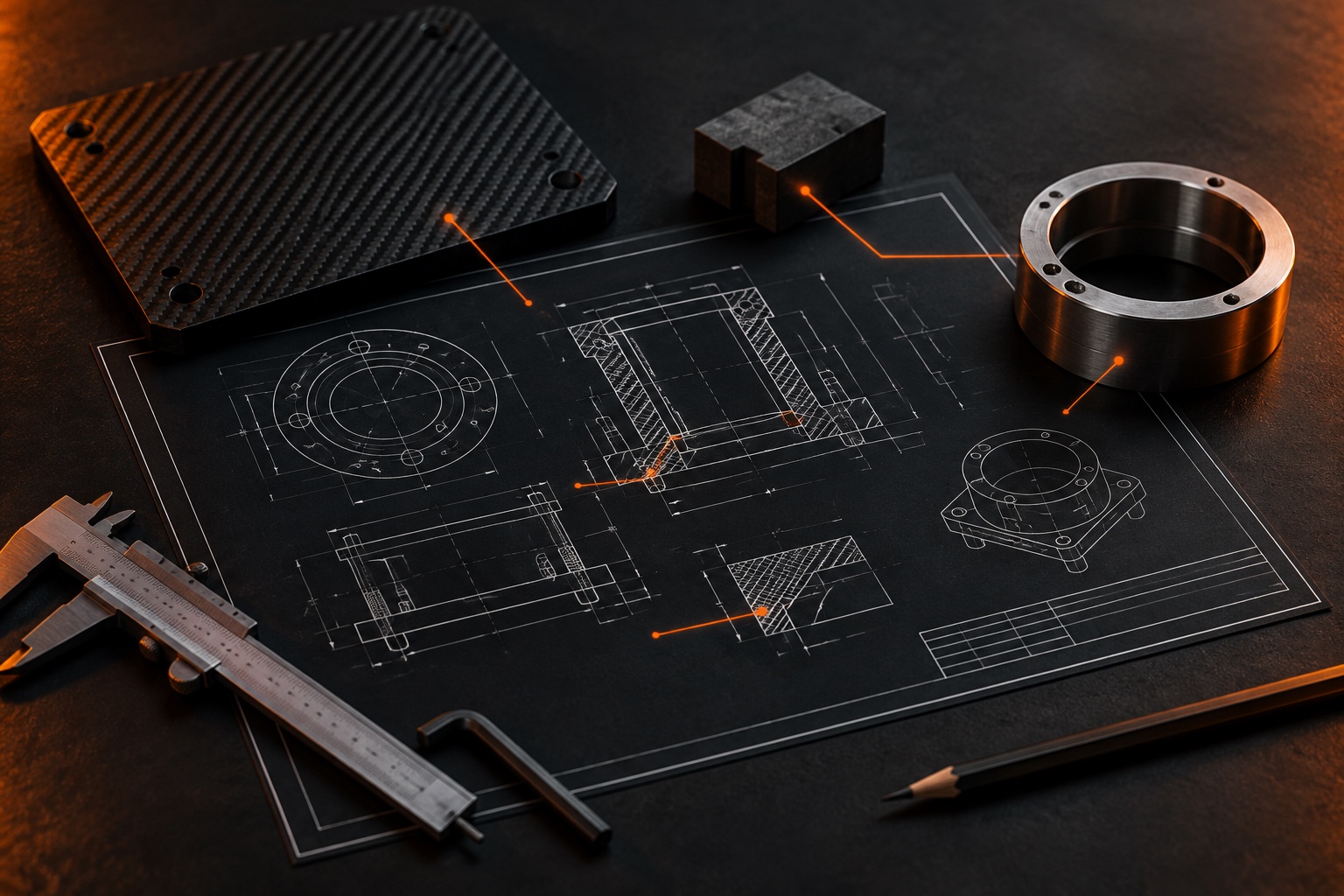
Workpiece & support
Workpiece drawings and dimensions; alloy or material; component weight and quantity; total load per fixture; required orientation and support locations.
Furnace & thermal cycle
Furnace type and working-zone dimensions; operating temperature and thermal cycle; vacuum or process atmosphere; quenching method, where applicable.
Loading & handling
Hearth rails or furnace support arrangement; manual or automated loading method; lifting and access constraints.
Existing arrangements & compatibility
Existing fixture drawings or photographs, where available; known contact-reaction or contamination concerns; inspection and maintenance requirements.
Assemblies & construction details
Custom Furnace Fixture Examples
Examples of custom-designed CFC furnace fixtures, modular assemblies and specialist ceramic components supplied for high-temperature processing applications. Our solutions are developed around individual workpiece geometries, furnace operating conditions and material compatibility requirements.
Photograph
Large Circular CFC Furnace Fixture
Custom-designed circular CFC furnace fixture incorporating integrated ceramic contact components. Developed for a large bottom-loading vacuum furnace to support aerospace components during heat treatment.
Photograph
High-Strength CFC Support Grid
High-strength CFC base grid designed to support ceramic saggars during a powder sintering process, providing a structural support platform for high-temperature processing.
Photograph
Alumina Fibre Composite Contact Plates
Alumina fibre composite plates used as separation layers between metallic workpieces and CFC furnace fixtures, helping prevent undesirable contact reactions during heat treatment.
CAD illustration
Modular Multi-Tier CFC Furnace Fixture
CAD illustration of a modular, multi-tier CFC furnace fixture incorporating high-temperature steel supports, designed to accommodate automotive gears and shafts during heat treatment.
Photograph
Alumina Fibre Composite Isolation Plates
Alumina fibre composite plates used to isolate metallic workpieces from CFC fixture surfaces, helping minimise direct-contact reactions during thermal processing.
Photograph
High-Strength 12K Biaxial CFC Plate
Close-up of the high-strength, 12K roving biaxial carbon fibre composite plate material used in Quest Engineering's CFC fixture designs, highlighting its woven reinforcement structure.
Photograph
Trapezoidal Alumina Ceramic Contact Profiles
Custom trapezoidal alumina ceramic profiles designed for integration into CFC furnace fixtures. These provide a ceramic contact interface between the workpieces and CFC structure, helping prevent undesirable eutectic contact reactions.
CAD illustration
Modular Circular Multi-Tier CFC Fixture
CAD illustration of a modular, circular multi-tier CFC furnace fixture incorporating integrated ceramic contact components for workpiece support and separation.
Photograph
U-Profile Alumina Ceramic Contact Components
U-profile alumina ceramic components designed for integration into CFC furnace fixtures, providing a ceramic contact surface to help prevent undesirable eutectic reactions between processed alloys and the carbon-based structure.
CAD illustration
Rectangular CFC Grid with Integrated Ceramics
CAD illustration of a custom rectangular CFC support grid incorporating U-profile alumina ceramic contact components. The modular concept can also be developed into multi-tier fixture assemblies.
Related solutions
Request a quote
Discuss your custom fixture requirements.
Custom-designed assemblies or manufacture to customer drawings. Online quotation submissions and file uploads are not yet available.