Materials Supply / Refractory Metals & Alloys
Molybdenum (Mo)
Commercially pure Mo | grade and manufacturing route to specification
Molybdenum is a refractory metal characterised by its high melting point, useful elevated-temperature strength, thermal conductivity and relatively low thermal expansion. It is widely used in high-temperature furnace components, specialist tooling and industrial applications where operating atmosphere and material compatibility are carefully controlled.
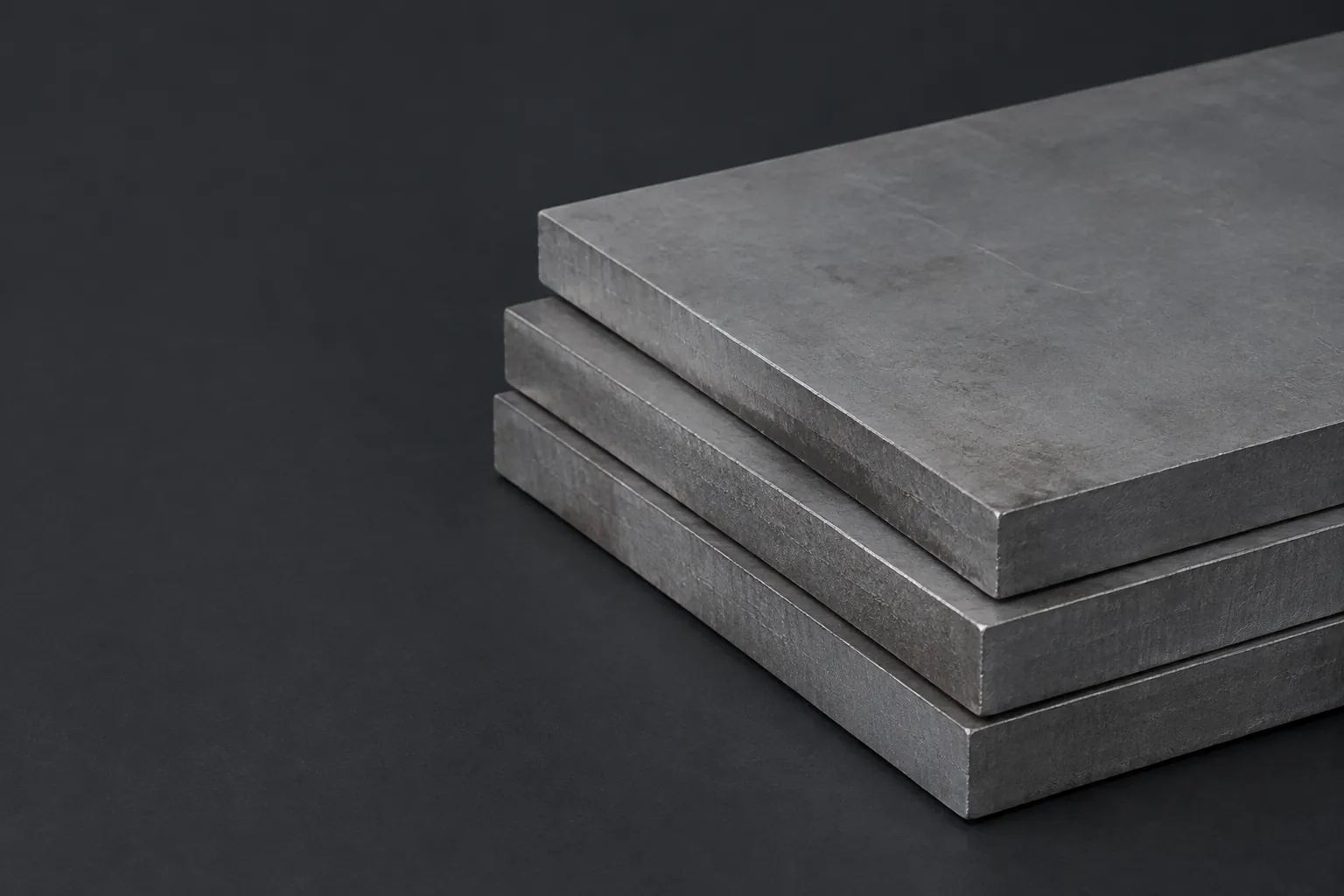
The image shows illustrative metal product forms, not verified Molybdenum (Mo) stock.
Raw & semi-finished materials
Available material forms
Confirm the actual material grade, manufacturing route, condition, dimensions, product form and availability. Listed forms are enquiry options, not stock commitments; a flat-product specification does not automatically cover wire, tube, forged or machined parts.
- Plate
- Sheet
- Bar
- Rod
- Wire
- Tube — where available
- Custom-fabricated or machined components
Material overview
Molybdenum (Mo)
Molybdenum is a refractory metal characterised by its high melting point, useful elevated-temperature strength, thermal conductivity and relatively low thermal expansion. It is widely used in high-temperature furnace components, specialist tooling and industrial applications where operating atmosphere and material compatibility are carefully controlled.
- High melting point
- Useful high-temperature mechanical performance
- Relatively low coefficient of thermal expansion
- Good thermal conductivity
- Suitable for selected vacuum and controlled-atmosphere applications
- Susceptible to oxidation at elevated temperatures in air
Designations and product-specific specifications
| Reference | Scope and qualification |
|---|---|
| Material | Molybdenum (Mo) |
| ASTM B386/B386M-25 | Plate, sheet, strip, foil and ribbon; drawing-grade requirements separate |
| ASTM B387/B387M-23 | Bar, rod and wire no smaller than 0.51 mm diameter or equivalent cross-section |
| Manufacturing grades | 360/361/365: separate unalloyed Mo routes; 363/364: vacuum arc-cast / powder-metallurgy TZM |
| ASTM F289-96(2025) | Commercially pure Mo wire and rod for electronic applications; not a generic TZM specification |
| ASTM B1024/B1024M-23 | Isotropic unalloyed monolithic Mo, UNS R03610; not generic TZM or all Mo forms |
Additional official scopes: B387/B387M-23, F289-96(2025), B1024/B1024M-23. Full numerical acceptance tables not inspected. Grade names do not establish equivalency; ASTM scope describes TZM with 0.1% Zr while Plansee publishes 0.08% Zr. Verify full chemistry tolerances before claiming compliance.
ASTM — B386/B386M-25 official scope
Specification review
Technical verification requirements
Controlled specification acceptance
Public ASTM scopes establish product coverage, not complete numerical chemistry, mechanical acceptance or test requirements. Producer limits are not automatically ASTM acceptance limits.
Obtain the controlled ordered standard edition, grade, product dimensions, delivery condition and supplier certificate before technical approval.
Mechanical and physical evidence
No universal design allowables are presented. Missing tensile, yield, elongation, modulus or elevated-temperature creep values are withheld. Product-specific numerical data retain missing test details in their table notes.
Obtain matched producer data with test temperature, specimen, gauge length, test method and processing condition; do not substitute data from similar grades.
Engineering reference
Technical data
| Constituent | Published producer requirement |
|---|---|
| Mo metallic purity | 99.97%, excluding W |
| Tungsten | 300 µg/g maximum |
| Carbon | 30 µg/g maximum |
| Oxygen | 40 µg/g maximum |
| Nitrogen | 10 µg/g maximum |
| Hydrogen | 10 µg/g maximum |
Selected guaranteed producer maxima, not a complete ASTM acceptance table. Brochure prints ≥99.97% and website table >99.97%; metallic purity excludes W and is not a total-element Mo assay. Typical maxima are not used as guaranteed limits. Unlisted impurities are not zero.
| Property / evidence | Verified basis |
|---|---|
| Tensile strength / 0.2% proof stress | Grade-dependent — confirm against applicable specification |
| Elongation / elastic modulus | Grade-dependent — confirm against applicable specification |
| Producer graphical evidence | 2 mm sheet: stress-relieved and recrystallised; 25 mm diameter bar: stress-relieved |
| High-temperature strength / creep | Separate Mo and TZM charts; exact numerical table not independently verified |
Plansee typical curves are not specification minima. No curve-digitised values, generic hardness, arbitrary annealing selectors or service-temperature limits are created. Test direction and tensile test method are not established in accompanying text.
| Property | Reference value | Basis |
|---|---|---|
| Density | 10.22 g/cm³ | 20°C |
| Melting point | 2620°C | Phase transition; not a service limit |
| Thermal conductivity | 142 W/(m·K) | 20°C |
| Linear thermal expansion coefficient | 5.2 × 10⁻⁶/K | At 20°C; not an interval mean |
Informational Plansee pure-Mo values, not guaranteed finished-product acceptance data. Elastic modulus withheld; do not transfer these constants to TZM.
Typical applications
Engineering applications
- Vacuum furnace components
- Heating elements and heat shields
- Furnace support structures
- High-temperature tooling
- Specialist thermal processing equipment
- Precision-machined refractory metal components
Subsequent manufacturing
Machining & processing
Atmosphere and complete process
High melting point does not establish unrestricted service in air. Oxidation, gas purity, residual oxygen, contamination, workpiece contact and the complete heating, cooling and thermal-cycling environment must be assessed; suitable vacuum, inert gas or other controlled atmospheres may be required. No universal service-temperature rating is assigned.
Grade, condition and fabrication
Purity, manufacturing route, cold work, recrystallisation, section size, temperature and test direction affect performance. Confirm the material condition before machining, forming, joining or using mechanical values.
Contact compatibility
Chemical compatibility and contamination at workpiece contacts must be assessed separately from structural load capacity.
Unalloyed versus strengthened grades
Commercially pure molybdenum is not interchangeable with TZM, dispersion-strengthened molybdenum or Mo–W alloys. Route, purity and recrystallisation affect strength and ductility.
Material certification & testing
Documentation must be agreed for the actual material grade, product form, manufacturing route and specification edition.
No certification, stock availability, aerospace approval or compliance with a referenced standard is implied. Quotation submissions and uploads remain disabled.
- Chemical analysis and material traceability, where agreed
- Mechanical test report for the ordered condition, where required
- EN 10204 3.1 certificate or Certificate of Conformity, subject to agreement
Material enquiry
Request a material quotation
Molybdenum (Mo) supplied to your material form, dimensions and specification.