Materials Supply / Aluminium Alloys
Aluminium Alloy 2014
High-strength heat-treatable aluminium-copper alloy | UNS A92014 | EN AW-2014 (AlCu4SiMg)
Aluminium alloy 2014 is a high-strength, heat-treatable aluminium-copper alloy with silicon, manganese and magnesium additions.
Corrosion resistance is lower than 6000-series alloys, so protective finishing is normally required.
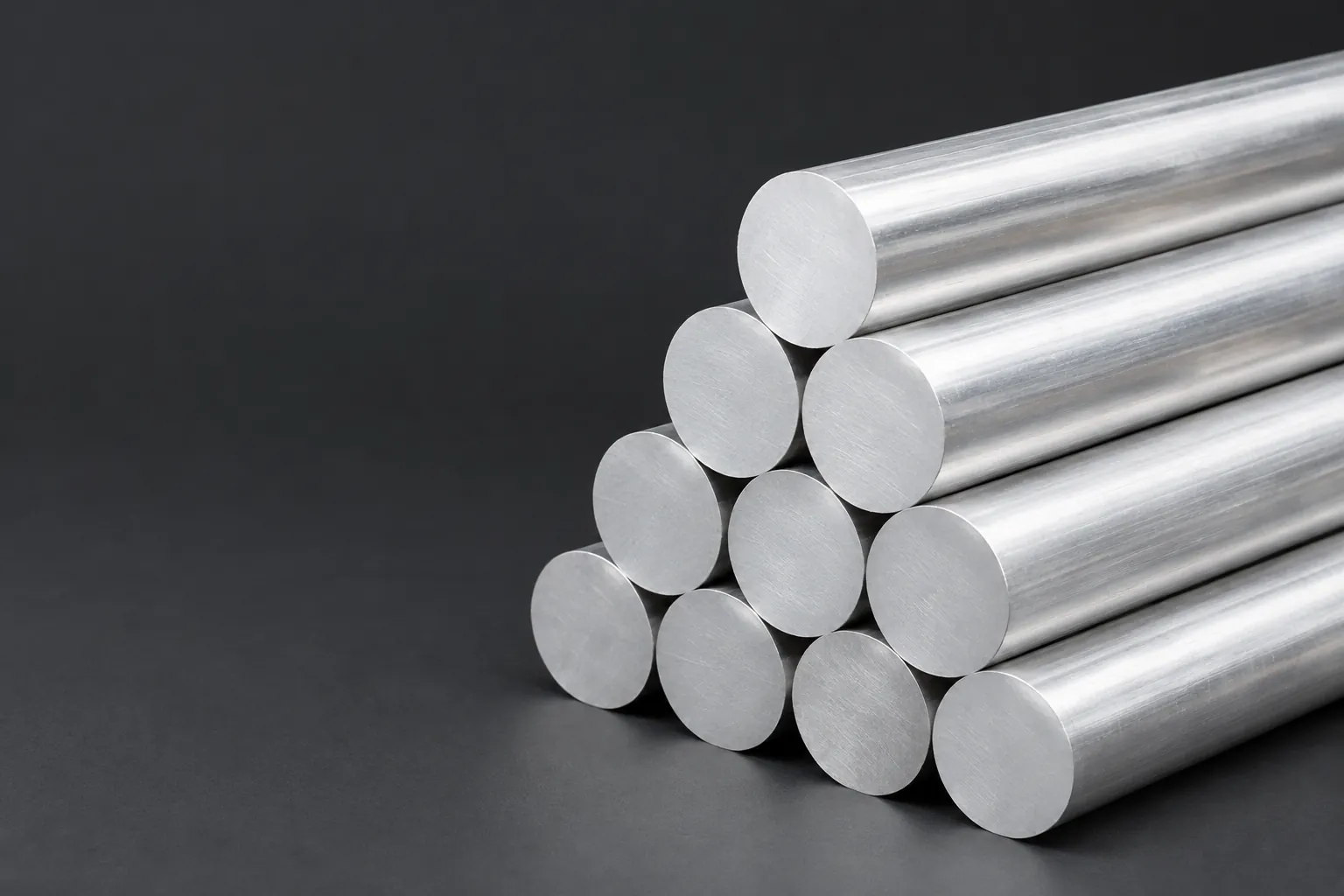
Imagery is illustrative only; it does not identify a certified alloy, temper or available stock.
Raw & semi-finished materials
Available material forms
Forms are those linked to 2014 in specification cross-references; tempers differ by form. Supply remains subject to supplier, specification, temper and dimensional confirmation; no Quest stockholding is implied.
- Forgings and rings
- Sheet and plate (bare and Alclad)
- Seamless tube
Material overview
Aluminium Alloy 2014
High-strength heat-treatable aluminium-copper alloy used for aerospace forgings, fittings and heavily loaded machined parts.
- Specification indexes associate 2014 with forgings and rings (AMS 4133, 4134, 4135), sheet and plate (AMS-QQ-A-250/3), Alclad sheet and plate (AMS 4028/4029) and seamless tube (ASTM B210, B241).
- No form-, thickness- and orientation-specific mechanical-property table was verified from a producer or standard, so no strength values are shown. Obtain properties from the ordered specification.
- Alclad 2014 is a separate clad product; bare-alloy properties must not be applied to it.
Designations and product specifications
| Designation / standard | Scope / status |
|---|---|
| UNS | A92014 |
| EN AW | EN AW-2014 / AlCu4SiMg (2014A is a separate registration) |
| AMS 4133 | Forgings and rings (cross-reference ASTM B594); temper not stated in the source |
| AMS 4134 | Forgings; temper not stated in the source |
| AMS 4135 | Forgings; temper not stated in the source |
| AMS-QQ-A-250/3 | Sheet and plate |
| AMS 4028 / 4029 | Alclad 2014 sheet and plate |
| ASTM B210 / B241 | Drawn / extruded seamless tube |
From supplier specification cross-references, not the standards themselves; current revisions and scopes not accessed. EN 485, EN 586 and EN 755 texts not accessed.
Specification review
Technical verification requirements
Designations / form / temper / dimensions
Product scopes were reviewed row by row. Recorded cross-references do not establish every current revision, ordered form, temper and dimensional limit; EN/UNS registries and complete controlled AMS/ASTM/EN texts were not inspected.
Obtain applicable controlled specification and producer confirmation; submit to technical review.
Mechanical properties
Missing temper/product-form mechanical values remain unresolved; absence is not evidence that an alloy property is zero or incorrect.
Obtain producer mechanical tables by temper, form, thickness and orientation before adding any values.
Grade selection
2011 compared with 2014
| Aspect | 2011 | 2014 |
|---|---|---|
| Registered chemistry (AA) | Cu 5.0–6.0; Pb 0.20–0.6; Bi 0.20–0.6 | Cu 3.9–5.0; Si 0.50–1.2; Mn 0.40–1.2; Mg 0.20–0.8 |
| Primary purpose | Free-machining turned parts (Pb/Bi chip breakers) | High-strength heat-treatable forgings and structural parts |
| Machinability | Rated A by Kaiser; short chips | Good machinability (supplier statement); not free-machining |
| Fabrication limits | Welding not recommended except resistance welding (fair); anodising only fair; lead regulation | Lower corrosion resistance — protective finishing advised |
| Typical applications | Screw-machine and precision turned parts | Aircraft fittings, forgings, high-load machined parts |
Qualitative comparison only. No numerical strength comparison is shown because no directly comparable temper and product-form data were verified for both alloys.
The Aluminum Association — International Alloy Designations and Chemical Composition Limits (Teal Sheets), August 2025
Engineering reference
Technical data
| Element | Mass % | Limit |
|---|---|---|
| Al | Remainder | Balance |
| Cu | 3.9–5.0 | Range |
| Si | 0.50–1.2 | Range |
| Mn | 0.40–1.2 | Range |
| Mg | 0.20–0.8 | Range |
| Fe | 0.7 | Maximum |
| Cr | 0.10 | Maximum |
| Zn | 0.25 | Maximum |
| Ti | 0.15 | Maximum |
Aluminum Association registered limits; single values are maximums. Al is the remainder (balance). Other elements: 0.05% each, 0.15% total maximum. Footnote 7: a Zr+Ti limit of 0.20% maximum may be used for extruded and forged products only, by producer–purchaser agreement. Confirm against the ordered specification and mill certificate.
The Aluminum Association — International Alloy Designations and Chemical Composition Limits (Teal Sheets), August 2025
O rod/bar — Kaiser typical example
| Property | Value |
|---|---|
| Ultimate tensile strength | 186 MPa |
| Yield strength (offset unstated) | 97 MPa |
| Elongation / 4D | 18% |
Kaiser Rod & Bar Alloy 2014, p1, typical mechanical properties. Tensile specimen diameter 0.500 in (12.7 mm); elongation gauge 4D (50.8 mm). Producer groups the listed tempers in one row; no processing equivalence is inferred. Test temperature, orientation and stock-size applicability are not stated. Not plate, forging or extrusion acceptance data; not specification minima or design allowables.
T4 / T451 rod/bar — Kaiser typical example
| Property | Value |
|---|---|
| Ultimate tensile strength | 427 MPa |
| Yield strength (offset unstated) | 290 MPa |
| Elongation / 4D | 20% |
Kaiser Rod & Bar Alloy 2014, p1, typical mechanical properties. Tensile specimen diameter 0.500 in (12.7 mm); elongation gauge 4D (50.8 mm). Producer groups the listed tempers in one row; no processing equivalence is inferred. Test temperature, orientation and stock-size applicability are not stated. Not plate, forging or extrusion acceptance data; not specification minima or design allowables.
T6 / T651 rod/bar — Kaiser typical example
| Property | Value |
|---|---|
| Ultimate tensile strength | 483 MPa |
| Yield strength (offset unstated) | 414 MPa |
| Elongation / 4D | 13% |
Kaiser Rod & Bar Alloy 2014, p1, typical mechanical properties. Tensile specimen diameter 0.500 in (12.7 mm); elongation gauge 4D (50.8 mm). Producer groups the listed tempers in one row; no processing equivalence is inferred. Test temperature, orientation and stock-size applicability are not stated. Not plate, forging or extrusion acceptance data; not specification minima or design allowables.
Temper designations (ANSI H35.1 summary)
T3: solution heat treated, cold worked, naturally aged. T4: solution heat treated, naturally aged. T6: solution heat treated, artificially aged. T8: solution heat treated, cold worked, artificially aged. A following 51 (e.g. T351, T651, T851) means stress relieved by controlled stretching; 510/511 apply to extruded products (511 allows minor straightening); 52 means stress relieved by compression. Not every alloy is produced in every temper or form.
Solution treatment and ageing
No producer-verified solution or ageing temperatures were found; use the ordered specification. T651 (plate) and T6510/T6511 (extrusions) are stress-relieved variants and are not interchangeable with T6.
Temper availability depends on product form: sources list T451 and T651 for sheet/plate and T6510/T6511 for extruded tube.
ANSI H35.1 temper designation system (The Aluminum Association) — summary; full standard not accessed
Material selection
Corrosion resistance & performance
Lower corrosion resistance than 6061 (supplier statement); protective coatings or controlled exposure are advised.
Alclad sheet and plate carry a corrosion-protective cladding; bare product does not.
Performance depends on temper and product form; no seawater suitability is claimed.
Typical applications
Engineering applications
- Aerospace forgings, where specified and approved
- Aircraft structural fittings
- High-strength machined parts
- Mechanical engineering components
Subsequent manufacturing
Machining & processing
Machining
Good machinability in heat-treated tempers (supplier statement). Machining parameters depend on temper, tooling, set-up and part geometry; no universal cutting speed is given. Machining of stress-relieved (…51) tempers reduces, but does not eliminate, distortion from residual stress.
Forging
Widely specified for forgings and rings (AMS 4133–4135). Follow the forging specification for temper and inspection.
Welding
No verified producer weldability rating was found; qualify any joining process.
Material certification & testing
Agree documentation and inspection at enquiry stage. Alloy designation alone does not define compliant aerospace material — the specification, temper, product form and dimensions must also be confirmed.
Not every test or certificate is automatically included. These records do not confer aerospace approval.
- EN 10204 3.1 material certificate, where agreed with the supplier
- Certificate of Conformity
- Heat / batch (cast) traceability to the mill certificate
- Chemical analysis and temper verification
- Mechanical testing and hardness testing to the ordered specification
- Heat-treatment records
- Ultrasonic, aerospace-specific or customer-specific inspection only where applicable and agreed
Material enquiry
Request a material quotation
Aluminium Alloy 2014 supplied to your material form, dimensions and specification.