Materials Supply / Alloy & High-Strength Steels
9310 Premium Carburising Steel
SAE / AISI 9310 | AMS6260 / 6265 / 6267 | Ni–Cr–Mo aerospace carburising steel
9310 is a low-carbon, high-nickel chromium–molybdenum carburising steel. Its high hardenability supports high core hardness beneath a carburised case in heavier sections.
Aircraft-quality air-melt (AMS6260), vacuum consumable-electrode remelted (AMS6265) and electroslag-or-vacuum remelted (AMS6267) material are distinct procurement routes. 9315 (AMS6263) is a different grade.
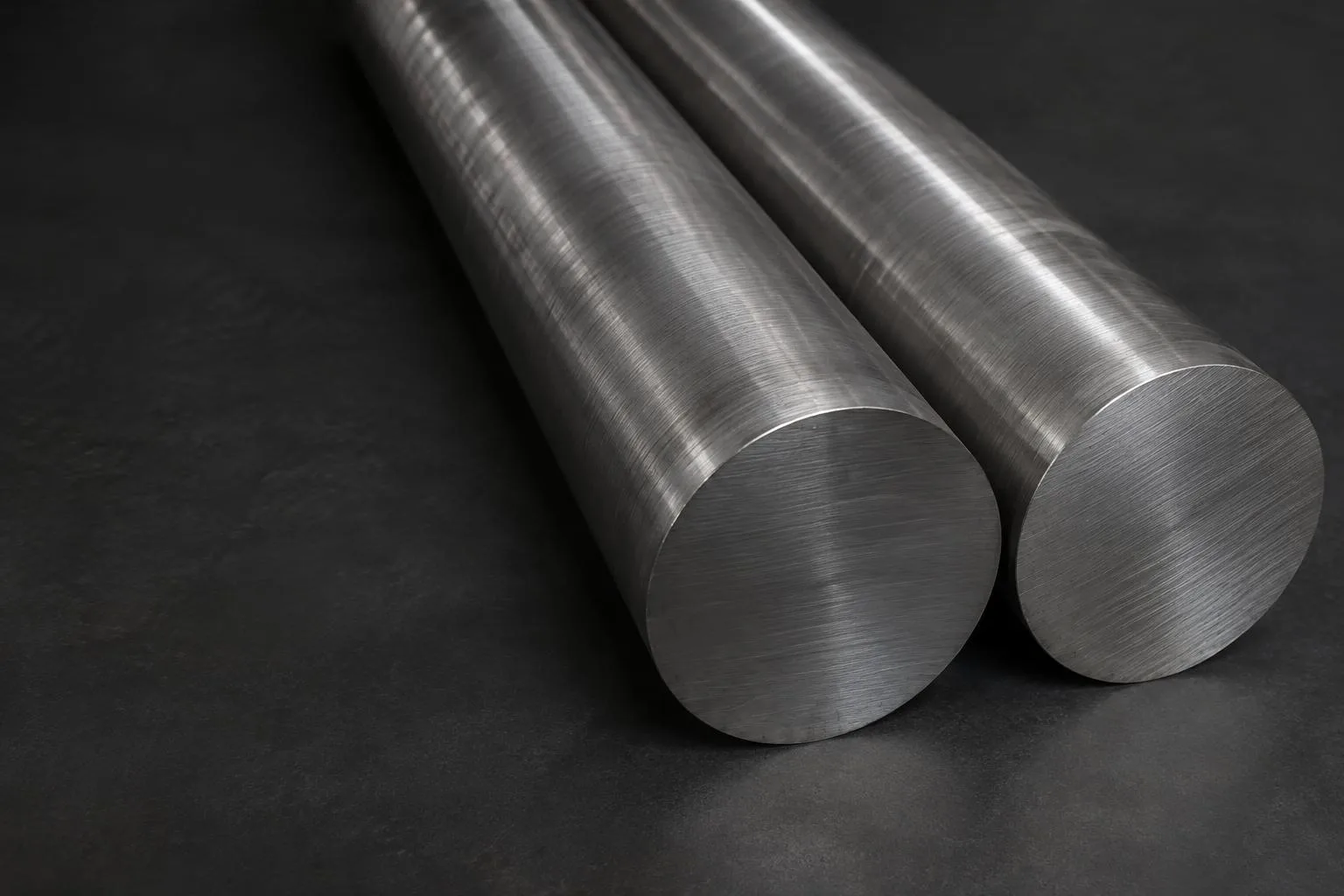
Imagery is illustrative steel product forms, not certified 9310 stock or evidence of Quest stockholding.
Raw & semi-finished materials
Available material forms
Carpenter lists billets, hot-rolled, cold-drawn and centreless-ground bars and forgings; Liberty lists normalised and tempered bright bar 18–250 mm. AMS6260/6265/6267 titles include mechanical tubing. Producer scopes are not Quest stock; confirm all forms and sizes at enquiry.
- Billet and hot-rolled bar
- Cold-drawn / centreless-ground bar
- Forgings and forging stock
- Mechanical tubing — specification enquiry
Material overview
9310 Premium Carburising Steel
A low-carbon 3.25% nickel–chromium–molybdenum carburising steel widely specified for aerospace gears, usually in remelted premium quality.
- Core properties shown here come from Carpenter’s three pseudo-carburising treatments and Aubert & Duval’s typical properties beneath the case. They are typical values, not acceptance minima.
- A VAR designation alone does not establish VIM primary melting; VIM-VAR material is specified through customer specifications.
- Case depth and case hardness are not assigned to any mechanical dataset below.
Designations and product specifications
| Designation / standard | Scope and qualification |
|---|---|
| SAE / AISI | 9310 |
| UNS | G93106 cited by supplier literature — official registry entry not directly inspected |
| AMS6260T (October 2022) | Aircraft-quality bars, forgings, mechanical tubing and forging stock; described by suppliers as air melt |
| AMS6265R (October 2021) | Premium aircraft-quality, vacuum consumable electrode remelted; later revision S not verified |
| AMS6267L (2026) | Premium aircraft-quality, electroslag remelted or consumable electrode vacuum remelted |
| European similar grade | 10NiCrMo13-5 (Aubert & Duval FADCW) — similar, not identical documentation |
| ASTM A322-24 | Hot-wrought alloy bars; not evidence of aircraft quality or remelting |
| Excluded | AMS6263P is 9315 (0.11–0.17% C), not 9310 |
Do not infer type mapping from AMS titles; full normative clauses were not accessed. Customer specifications such as BMS 7-249 are producer reference listings only.
SAE AMS6265R — 9310 vacuum consumable electrode remelted (22 October 2021)
Specification review
Technical verification requirements
Specifications
Full AMS6260/6265/6267 texts not accessed; AMS6265 current revision (R vs S) unresolved; AMS6267L status from ANSI catalogue.
Obtain controlled current AMS texts for chemistry, melt route and acceptance limits.
Mechanical evidence
Liberty publishes figures labelled AMS6260/6265 limits (1150 MPa UTS, 900 MPa proof) without their qualifying treatment; not used as acceptance limits. Producer data lack orientation and section.
Obtain AMS acceptance limits and mill test reports with full test basis.
Case properties
No case depth, fatigue, fracture toughness or wear data were published by the reviewed producers.
Establish case and fatigue requirements per component.
Grade selection
8620, 9310 and 52100 — different hardening principles
| Aspect | 8620 | 9310 | 52100 |
|---|---|---|---|
| Hardening principle | Case carburising | Case carburising (premium aerospace routes common) | Through hardening — not a carburising steel |
| Carbon basis used here | 0.18–0.23% (SSAB plate limits) | 0.07–0.13% (Liberty AMS-referenced limits) | 1.00% (Carpenter nominal) |
| Nickel basis used here | 0.40–0.70% | 3.00–3.50% | Not a deliberate addition (Ovako variants ≤0.25%) |
| Chromium basis used here | 0.40–0.60% | 1.00–1.40% | 1.40% (Carpenter nominal) |
| Key aerospace specifications | AMS6274 air melt; AMS6276 / AMS6277 remelted | AMS6260; AMS6265 VAR; AMS6267 ESR or VAR | AMS6440; AMS6444 VAR; ASTM A295 |
| Published property basis on these pages | Supply hardness; one carburised research specimen | Typical core properties after pseudo-carburising | Annealed-bar tensile data; tempering-hardness response |
Each value retains its own source basis; producer typical figures and specification-referenced limits are not interchangeable. 9315 (AMS6263) is a different grade from 9310. No universal fatigue, wear or toughness ranking is inferred; substitution requires engineering approval against the full specification, melt route, section, heat treatment and tests.
Engineering reference
Technical data
| Element | Minimum mass % | Maximum mass % |
|---|---|---|
| Carbon | 0.07 | 0.13 |
| Manganese | 0.40 | 0.70 |
| Silicon | 0.15 | 0.35 |
| Nickel | 3.00 | 3.50 |
| Chromium | 1.00 | 1.40 |
| Molybdenum | 0.08 | 0.15 |
| Phosphorus | — | 0.015 |
| Sulphur | — | 0.015 |
| Boron | — | 0.001 |
| Copper | — | 0.35 |
| Iron | Balance | Balance |
Producer-published limits referenced to AMS6260/6265, not independently verified against the licensed AMS text. Carpenter nominal: C 0.10, Mn 0.50, Si 0.25, Ni 3.25, Cr 1.20, Mo 0.12; Carpenter’s webpage gives P and S ≤0.025, which differs from Liberty. Use the ordered specification for acceptance.
| Property | Published value | Qualification |
|---|---|---|
| Density | 7.8 | Unit not printed in source |
| Mean coefficient of thermal expansion | 11.8 × 10⁻⁶ /°C | 20–100°C |
| Mean coefficient of thermal expansion | 14.1 × 10⁻⁶ /°C | 20–700°C |
| Ac1 | 690°C | Critical point |
| Ac3 | 795°C | Critical point |
Elastic modulus, Poisson’s ratio, thermal conductivity, specific heat and resistivity were not published by the reviewed 9310 producers and are not substituted from generic steel data.
Carpenter treatment A — typical core properties
| Property | Producer typical | Basis |
|---|---|---|
| Treatment | Pseudo-carburised 927°C 8 h, oil quenched; tempered 149°C 2 h | As published |
| Ultimate tensile strength | 1289 MPa (187 ksi) | Typical core |
| Yield strength | 1117 MPa (162 ksi) | Offset not stated |
| Elongation | 15% | 2 in (50.8 mm) gauge length |
| Reduction of area | 51% | Typical core |
| Core hardness | 375 HBW | Typical core |
Carpenter/Latrobe 9310 VAC-ARC (04/07), p. 2, “Typical core properties”. Specimen orientation, product form, section size, sampling location and test standard not stated; no case depth or case hardness assigned. Typical values, not specification minima or design allowables.
Carpenter treatment B — typical core properties
| Property | Producer typical | Basis |
|---|---|---|
| Treatment | Pseudo-carburised 927°C 8 h, slow cooled; reheated 774°C, oil quenched; tempered 149°C 2 h | As published |
| Ultimate tensile strength | 1069 MPa (155 ksi) | Typical core |
| Yield strength | 896 MPa (130 ksi) | Offset not stated |
| Elongation | 15.5% | 2 in (50.8 mm) gauge length |
| Reduction of area | 52% | Typical core |
| Core hardness | 331 HBW | Typical core |
Carpenter/Latrobe 9310 VAC-ARC (04/07), p. 2, “Typical core properties”. Specimen orientation, product form, section size, sampling location and test standard not stated; no case depth or case hardness assigned. Typical values, not specification minima or design allowables.
Carpenter treatment C — typical core properties
| Property | Producer typical | Basis |
|---|---|---|
| Treatment | Pseudo-carburised 927°C 8 h, slow cooled; reheated 829°C, oil quenched; tempered 149°C 2 h | As published |
| Ultimate tensile strength | 1207 MPa (175 ksi) | Typical core |
| Yield strength | 1069 MPa (155 ksi) | Offset not stated |
| Elongation | 16% | 2 in (50.8 mm) gauge length |
| Reduction of area | 53% | Typical core |
| Core hardness | 363 HBW | Typical core |
Carpenter/Latrobe 9310 VAC-ARC (04/07), p. 2, “Typical core properties”. Specimen orientation, product form, section size, sampling location and test standard not stated; no case depth or case hardness assigned. Typical values, not specification minima or design allowables.
Aubert & Duval — oil quench 825°C, −70°C, temper 150°C — typical
| Property | Producer typical | Basis |
|---|---|---|
| Ultimate tensile strength | 1150 MPa | Typical / average, not guaranteed |
| 0.2% yield strength | 900 MPa | Typical / average |
| Elongation | 14% | 5d gauge length |
| Impact energy (KV) | 140 J | PDF temperature not printed; webpage labels column −60°C |
| Annealed hardness (825°C, slow cool) | 217 HB | Separate annealed condition |
Aubert & Duval FADCW datasheet: oil quench from 825°C, sub-zero treatment at −70°C, temper 150°C. Product form, section, orientation and impact specimen not stated. Typical values, not specification limits.
Forging
1093–1149°C (2000–2100°F).
Annealing
802–857°C, furnace cool; annealed hardness 179–229 HBW.
Normalising
899–954°C, air cool.
Carburising
899–927°C, slow cool. Case depth and carbon potential are component-specific.
Hardening
Oil quench from 774–846°C (as printed).
Tempering
121–177°C. Approximate case hardness 60–62 HRC and core hardness 331–363 HBW (Carpenter general guidance).
Carpenter/Latrobe general recommendations, distinct from the individual treatments behind the mechanical data. Aubert & Duval gives carburising ~900°C, hardening 825–850°C oil, temper 140–200°C after sub-zero treatment. Qualify a component-specific procedure.
Typical applications
Engineering applications
- Aerospace transmission gears and pinions
- Heavily loaded carburised shafts and bearings, where approved
- Premium-quality carburised components to AMS6265/6267
Subsequent manufacturing
Machining & processing
Machining
Carpenter rates annealed 9310 at 40% of B1112 machinability. Machine before carburising and allow grinding stock.
Cleanliness
Carpenter reports AMS2300 magnetic-particle conformance and typical ASTM E45 worst-field ratings; cleanliness requirements must be stated in the purchase specification.
Case-depth specification
Specify effective case depth, hardness criterion, surface and core hardness on the component drawing.
Application evidence
Listed applications are established selection categories, not claims of stock or component approval.
Material certification & testing
Documentation and inspection must be agreed for the actual grade, specification revision, melting route, product form, ruling section and delivery condition.
No certificate, test, aerospace approval or grade equivalence is automatic. Case depth and case/core properties belong to the finished heat-treated component, not to the grade name; quotation controls remain disabled.
- EN 10204 3.1 material certificate, where agreed with the supplier
- Certificate of Conformity
- Heat / batch traceability to the producing mill
- Chemical analysis and mechanical test reports to the ordered specification
- Carburising, hardening and tempering records, case-depth and hardness-traverse reports where required
- Melting-route, cleanliness, ultrasonic, PMI or customer-specific testing only where agreed
Material enquiry
Request a material quotation
9310 Premium Carburising Steel supplied to your material form, dimensions and specification.