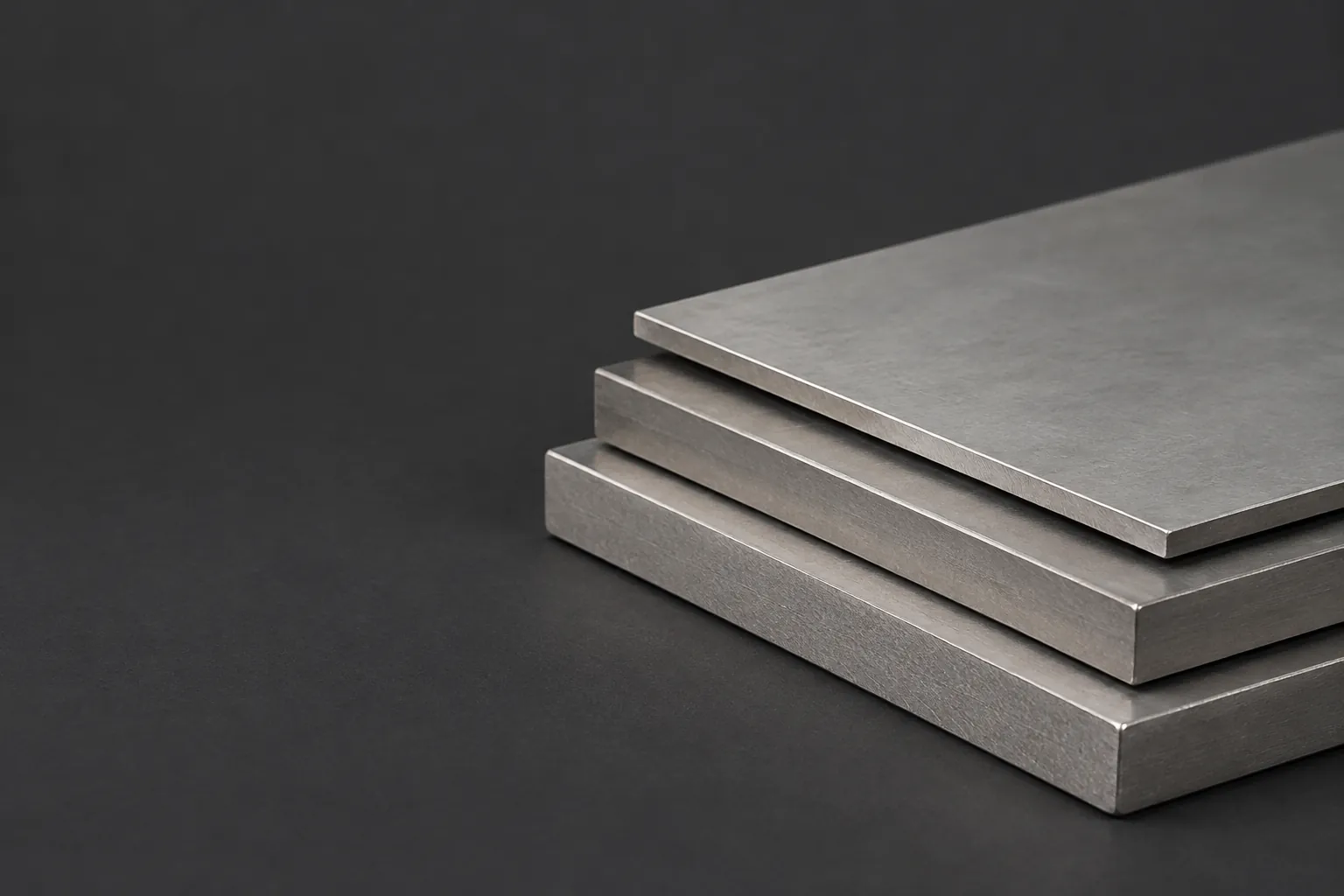
Materials Supply / Nickel, Cobalt & High-Temperature Alloys
Haynes 230 Nickel Superalloy
Solid-solution strengthened | UNS N06230 | W.Nr. 2.4733
Solid-solution-strengthened nickel-chromium-tungsten-molybdenum superalloy for high-temperature strength and oxidation resistance.
HAYNES® and 230® are registered trademarks of Haynes International, Inc. Quest Engineering does not manufacture or own the alloy trademark.
Raw & semi-finished materials
Available material forms
Producer-supported product forms; availability is subject to ordered specification, dimensions and supplier confirmation. No Quest Engineering stockholding is implied.
- Sheet
- Strip
- Plate
- Bar
- Forging stock
- Seamless pipe and tube
- Welded pipe and tube
- Fittings
Material overview
Haynes 230 Nickel Superalloy
Solid-solution-strengthened nickel-chromium-tungsten-molybdenum superalloy for high-temperature strength and oxidation resistance.
- Solid-solution-strengthened nickel-chromium-tungsten-molybdenum superalloy for high-temperature strength and oxidation resistance.
- Numeric tables are restricted to retrieved official published values; unverified properties are explicitly unsupported. Nominal chemistry is not a purchase acceptance specification.
Designations and product specifications
| Designation / standard | Scope / status |
|---|---|
| UNS | N06230 |
| Werkstoff | 2.4733; DIN 17744 NiCr22W14Mo |
| AMS 5878 | Sheet, plate and strip; producer-listed reference |
| AMS 5891 | Bar / billet and forgings; producer-listed reference |
| ASTM B435 | Plate, sheet and strip |
| ASTM B572; B472 | Rod/bar; billet stock — verify exact full-standard scope |
| ASTM B622 | Seamless pipe and tube |
| ASTM B619; B626 | Welded pipe; welded tube |
| ASTM B366 | Fittings |
| ASTM B564 | Forgings |
| AMS 5839 | Bare welding rod; producer table groups N06230 and N06231 — do not treat filler as identical wrought chemistry |
Producer listing, not a claim of current edition or equivalence. Full standards must establish chemistry, dimensions, treatment and acceptance tests. Source groups 230 and 230-W in one row. Reference associations only: no equivalence, stock availability, aerospace approval or certified conformity is established by this page. Specify the ordered revision, product form, dimensions, manufacture/melt route, delivery condition and acceptance tests; obtain matching supplier confirmation and inspection documents.
Specification review
Technical verification requirements
Specifications / product form
Producer listings and historic references support alloy association but not every listed standard’s current revision, individual form, section-size, melt-route, heat-treatment tolerances or acceptance requirements. Existing qualification wording is appropriate, not proof of conformity.
Obtain controlled ordered-standard and producer confirmation before technical release.
Heat treatment / source access
The cited live producer principal-features page returned HTTP 403. Archived producer-authored brochure is accessible and provides independent support, but the live citation cannot be called freshly verified or current.
Associate schedule with accessible brochure and exact section after technical review; obtain current producer issue confirmation.
Engineering reference
Technical data
| Element | Mass % | Basis |
|---|---|---|
| Ni | 57 | Balance (approximate nominal Ni) |
| Cr | 22 | Nominal |
| W | 14 | Nominal |
| Mo | 2 | Nominal |
| Fe | 3 | Maximum |
| Co | 5 | Maximum |
| Mn | 0.5 | Nominal |
| Si | 0.4 | Nominal |
| Nb | 0.5 | Maximum |
| Al | 0.3 | Nominal |
| Ti | 0.1 | Maximum |
| C | 0.1 | Nominal |
| La | 0.02 | Nominal |
| B | 0.015 | Maximum |
One complete producer nominal-composition table; only expressly marked maxima are limits. No minimum or unlisted residual limits inferred; not a controlled full-standard chemistry.
| Property | Temperature / interval (°C unless RT) | Value | Unit |
|---|---|---|---|
| Density | RT | 8970 | kg/m³ (8.97 g/cm³ × 1000) |
| Melting range | Interval | 1301–1371 | °C |
| Thermal conductivity | RT | 8.9 | W/(m·K) |
| Thermal conductivity | 100 | 10.4 | W/(m·K) |
| Thermal conductivity | 200 | 12.4 | W/(m·K) |
| Thermal conductivity | 300 | 14.4 | W/(m·K) |
| Thermal conductivity | 400 | 16.4 | W/(m·K) |
| Thermal conductivity | 500 | 18.4 | W/(m·K) |
| Thermal conductivity | 600 | 20.4 | W/(m·K) |
| Thermal conductivity | 700 | 22.4 | W/(m·K) |
| Thermal conductivity | 800 | 24.4 | W/(m·K) |
| Thermal conductivity | 900 | 26.4 | W/(m·K) |
| Thermal conductivity | 1000 | 28.4 | W/(m·K) |
| Specific heat | RT | 397 | J/(kg·K) |
| Specific heat | 100 | 419 | J/(kg·K) |
| Specific heat | 200 | 435 | J/(kg·K) |
| Specific heat | 300 | 448 | J/(kg·K) |
| Specific heat | 400 | 465 | J/(kg·K) |
| Specific heat | 500 | 473 | J/(kg·K) |
| Specific heat | 600 | 486 | J/(kg·K) |
| Specific heat | 700 | 574 | J/(kg·K) |
| Specific heat | 800 | Not adopted: printed 5595 | J/(kg·K) |
| Specific heat | 900 | 609 | J/(kg·K) |
| Specific heat | 1000 | 617 | J/(kg·K) |
| Dynamic elastic modulus | RT | 209 | GPa |
| Dynamic elastic modulus | 100 | 207 | GPa |
| Dynamic elastic modulus | 200 | 200 | GPa |
| Dynamic elastic modulus | 300 | 193 | GPa |
| Dynamic elastic modulus | 400 | 186 | GPa |
| Dynamic elastic modulus | 500 | 181 | GPa |
| Dynamic elastic modulus | 600 | 175 | GPa |
| Dynamic elastic modulus | 700 | 168 | GPa |
| Dynamic elastic modulus | 800 | 159 | GPa |
| Dynamic elastic modulus | 900 | 150 | GPa |
| Dynamic elastic modulus | 1000 | 141 | GPa |
| Dynamic shear modulus | RT | 79 | GPa |
| Dynamic shear modulus | 100 | 79 | GPa |
| Dynamic shear modulus | 200 | 76 | GPa |
| Dynamic shear modulus | 300 | 73 | GPa |
| Dynamic shear modulus | 400 | 70 | GPa |
| Dynamic shear modulus | 500 | 67 | GPa |
| Dynamic shear modulus | 600 | 64 | GPa |
| Dynamic shear modulus | 700 | 61 | GPa |
| Dynamic shear modulus | 800 | 57 | GPa |
| Dynamic shear modulus | 900 | 52 | GPa |
| Dynamic shear modulus | 1000 | 48 | GPa |
| Poisson ratio | RT | 0.31 | 1 |
| Poisson ratio | 100 | 0.31 | 1 |
| Poisson ratio | 200 | 0.32 | 1 |
| Poisson ratio | 300 | 0.32 | 1 |
| Poisson ratio | 400 | 0.33 | 1 |
| Poisson ratio | 500 | 0.33 | 1 |
| Poisson ratio | 600 | 0.34 | 1 |
| Poisson ratio | 700 | 0.34 | 1 |
| Poisson ratio | 800 | 0.34 | 1 |
| Poisson ratio | 900 | 0.35 | 1 |
| Mean thermal expansion | 25–100 | 11.8 | 10⁻⁶/K |
| Mean thermal expansion | 25–200 | 12.4 | 10⁻⁶/K |
| Mean thermal expansion | 25–300 | 12.8 | 10⁻⁶/K |
| Mean thermal expansion | 25–400 | 13.2 | 10⁻⁶/K |
| Mean thermal expansion | 25–500 | 13.6 | 10⁻⁶/K |
| Mean thermal expansion | 25–600 | 14.1 | 10⁻⁶/K |
| Mean thermal expansion | 25–700 | 14.7 | 10⁻⁶/K |
| Mean thermal expansion | 25–800 | 15.2 | 10⁻⁶/K |
| Mean thermal expansion | 25–900 | 15.7 | 10⁻⁶/K |
| Mean thermal expansion | 25–1000 | 16.1 | 10⁻⁶/K |
| Thermal diffusivity | RT | 2.42 | 10⁻⁶ m²/s |
| Thermal diffusivity | 100 | 2.68 | 10⁻⁶ m²/s |
| Thermal diffusivity | 200 | 2.99 | 10⁻⁶ m²/s |
| Thermal diffusivity | 300 | 3.29 | 10⁻⁶ m²/s |
| Thermal diffusivity | 400 | 3.57 | 10⁻⁶ m²/s |
| Thermal diffusivity | 500 | 3.85 | 10⁻⁶ m²/s |
| Thermal diffusivity | 600 | 4.19 | 10⁻⁶ m²/s |
| Thermal diffusivity | 700 | 4.3 | 10⁻⁶ m²/s |
| Thermal diffusivity | 800 | 4.32 | 10⁻⁶ m²/s |
| Thermal diffusivity | 900 | 4.44 | 10⁻⁶ m²/s |
| Thermal diffusivity | 1000 | 4.82 | 10⁻⁶ m²/s |
RT as published; dynamic moduli, not static design values. Diffusivity converted exactly from 10⁻³ cm²/s. Source p13 prints 5595 J/(kg·K) at 800°C; cell withheld as suspect, no silent correction. Resistivity omitted: source metric unit printed µohm-m conflicts with magnitude and British column; resolve with producer.
Sheet — solution annealed
| Property | Typical value |
|---|---|
| Ultimate tensile strength | 837 MPa |
| 0.2% yield strength | 417 MPa |
| Elongation | 47.3% |
| Hardness | 92 HRB |
| Reduction of area | Not tabulated |
Solution-annealed wrought product; tensile table does not specify an exact anneal schedule. Hardness from separate solution-annealed form table, PDF p20, not necessarily same heat. Typical producer values, not specification minima or design allowables; confirm ordered condition, section limits, specimen requirements and gauge length where not stated.
Plate — solution annealed
| Property | Typical value |
|---|---|
| Ultimate tensile strength | 852 MPa |
| 0.2% yield strength | 383 MPa |
| Elongation | 46% |
| Hardness | 92 HRB |
| Reduction of area | Not tabulated |
Solution-annealed wrought product; tensile table does not specify an exact anneal schedule. Hardness from separate solution-annealed form table, PDF p20, not necessarily same heat. Typical producer values, not specification minima or design allowables; confirm ordered condition, section limits, specimen requirements and gauge length where not stated.
Full published form-specific tensile and creep/rupture tables; no graph digitisation.
Sheet — elevated-temperature tensile
| Temperature (°C) | 0.2% yield (MPa) | UTS (MPa) | Elongation (%) |
|---|---|---|---|
| 538 | 294 | 690 | 51.7 |
| 649 | 291 | 666 | 56.9 |
| 760 | 311 | 538 | 59.5 |
| 871 | 236 | 308 | 74.2 |
| 982 | 123 | 169 | 54.1 |
| 1093 | 69 | 90 | 37 |
Solution-annealed wrought product; tensile table does not specify an exact anneal schedule. Hardness from separate solution-annealed form table, PDF p20, not necessarily same heat.
Plate — elevated-temperature tensile
| Temperature (°C) | 0.2% yield (MPa) | UTS (MPa) | Elongation (%) |
|---|---|---|---|
| 538 | 263 | 706 | 53.2 |
| 649 | 267 | 677 | 53 |
| 760 | 260 | 533 | 68 |
| 871 | 234 | 311 | 94 |
| 982 | 116 | 168 | 91.2 |
| 1093 | 63 | 91 | 92.1 |
Solution-annealed wrought product; tensile table does not specify an exact anneal schedule. Hardness from separate solution-annealed form table, PDF p20, not necessarily same heat.
Sheet — creep and stress rupture
| Temperature (°C) | Creep (%) / R = rupture | 10 h (MPa) | 100 h (MPa) | 1000 h (MPa) | 10000 h (MPa) |
|---|---|---|---|---|---|
| 649 | 0.5 | - | 214 | - | - |
| 649 | R | - | 352 | 248 | 193 |
| 704 | 0.5 | 200 | 145 | 100 | - |
| 704 | 1 | 228 | 159 | 114 | - |
| 704 | R | 324 | 234 | 179 | 134 |
| 760 | 0.5 | 132 | 94 | 66 | 50 |
| 760 | 1 | 145 | 107 | 79 | 59 |
| 871 | 0.5 | 78 | 56 | 39 | 28 |
| 871 | 1 | 81 | 62 | 43 | 30 |
| 982 | 0.5 | 48 | 25 | 12 | 5.9 |
| 982 | 1 | 55 | 28 | 14 | 6.9 |
| 1038 | 0.5 | - | 12 | 5.5 | - |
| 1038 | 1 | - | 14 | 6.2 | - |
| 1093 | 0.5 | - | - | - | - |
| 1093 | 1 | - | 6.2 | - | - |
| 1093 | R | - | - | - | - |
Approximate initial stress, not design allowables. * = significant extrapolation. Solution annealed; specific schedule not stated in table. Rows carrying producer extrapolation markers are omitted here; no further extrapolation performed.
Plate — creep and stress rupture
| Temperature (°C) | Creep (%) / R = rupture | 10 h (MPa) | 100 h (MPa) | 1000 h (MPa) | 10000 h (MPa) |
|---|---|---|---|---|---|
| 649 | 0.5 | - | 241 | 159 | - |
| 649 | 1 | - | 269 | 183 | 121 |
| 649 | R | 517 | 386 | 283 | 200 |
| 704 | 0.5 | 241 | 148 | 100 | - |
| 704 | R | 407 | 290 | 207 | 145 |
| 760 | 0.5 | 131 | 93 | 69 | - |
| 760 | R | 255 | 186 | 138 | 98 |
| 816 | 0.5 | 97 | 72 | 57 | 42 |
| 816 | 1 | 114 | 86 | 66 | 48 |
| 816 | R | 179 | 138 | 97 | 68 |
| 871 | 0.5 | 71 | 52 | 39 | 28 |
| 871 | 1 | 81 | 62 | 43 | 30 |
| 871 | R | 138 | 94 | 66 | 43 |
| 927 | 0.5 | 54 | 39 | 27 | 17 |
| 927 | 1 | 61 | 47 | 31 | 19 |
| 927 | R | 103 | 69 | 41 | 25 |
| 982 | 0.5 | 40 | 24 | 12 | 6.2 |
| 982 | 1 | 43 | 28 | 14 | 7.6 |
| 982 | R | 65 | 41 | 22 | 12 |
| 1038 | 0.5 | 28 | 14 | 6.2 | - |
| 1038 | R | 48 | 26 | 12 | 6.9 |
| 1093 | 0.5 | 13 | 5.5 | 2.4 | -- |
| 1093 | R | 29 | 14 | 6.9 | 3.8 |
| 1149 | 1 | 6.9 | 3.0 | - | - |
| 1149 | R | 16 | 8.3 | 4.1 | - |
Approximate initial stress, not design allowables. * = significant extrapolation. Solution annealed; specific schedule not stated in table. Rows carrying producer extrapolation markers are omitted here; no further extrapolation performed.
Burner-rig dynamic oxidation
| Temperature (°C) | Exposure (h) | Metal loss (µm) | Average metal affected (µm) |
|---|---|---|---|
| 870 | 2000 | 23 | 99 |
| 980 | 1000 | 71 | 142 |
| 1090 | 500 | 180 | 251 |
| 1150 | 200 | 163 | 333 |
30-min cycles; 2 parts No.1 / 1 part No.2 fuel oil, air:fuel ~50:1, ~0.3 Mach; fan cooled near ambient each cycle. Product/treatment unspecified.
Oxidation performance
- Oxidation values are test-specific, not permissible metal loss or guaranteed life.
Published SI values retained without recalculation from rounded ksi. Suspect cells explicitly withheld. * denotes producer significant extrapolation where applicable. Suitability depends on loading, temperature, atmosphere, exposure duration and required service life. Test temperatures are not universal maximum service temperatures.
General wrought solution treatment
1177–1246°C, rapidly cooled or water quenched. Hold time not specified in principal features.
At-a-glance plate data treatment
1230°C, air cool or faster; independent published basis, not an additional ageing step.
Schedules are independent, not cumulative. Alternative schedules and code treatments must be ordered explicitly; no unverified completion of truncated schedules. Do not use this overview as a furnace work instruction or select a production route from conflicting source examples. A materials/process authority must approve the complete form- and condition-specific cycle, including precursor condition, section size, hold times, cooling and verification tests.
Material selection
Corrosion resistance & performance
The producer identifies high-temperature oxidation resistance as a material feature. Oxidation resistance is not a load-bearing strength rating or immunity to all corrosive environments.
Assess combustion gases, sulphur-bearing atmospheres and carburising conditions independently. Suitability depends on atmosphere, exposure duration, stress and required service life.
Typical applications
Engineering applications
- Gas turbine combustor components
- Industrial high-temperature components
- Transition ducts
- Furnace components
- Chemical and petrochemical plant
Subsequent manufacturing
Machining & processing
Forming and heat treatment
Hot work after heating throughout to 1177°C; cold work is feasible. Anneal and rapidly cool after working.
Joining
GTAW, GMAW and resistance welding are producer-supported.
Machining condition and tooling
Confirm the actual material condition before planning machining. Allow for work hardening; qualify tool material, rigidity, coolant and cutting engagement for the product. No universal speeds or feeds are specified.
Distortion, finishing and inspection
Agree machining allowance, final surface condition and dimensional inspection around heat treatment. Define surface and internal inspection, acceptance criteria and traceability to the ordered specification; additional testing is not automatic.
Material certification & testing
Certification and inspection options are subject to customer requirements and supplier confirmation.
Conformity must be demonstrated against the ordered specification, form and condition. Tests are not automatic; agree scope, acceptance criteria and documentation before ordering.
- EN 10204 3.1 material certificates
- Certificates of Conformity
- Heat/batch traceability
- Chemical analysis
- Mechanical testing
- Heat-treatment records
- Hardness testing
- Positive Material Identification (PMI)
- Ultrasonic testing where applicable
- Additional aerospace or customer-specific inspection requirements
Material enquiry
Request a material quotation
Haynes 230 Nickel Superalloy supplied to your material form, dimensions and specification.