Materials Supply / Nickel, Cobalt & High-Temperature Alloys
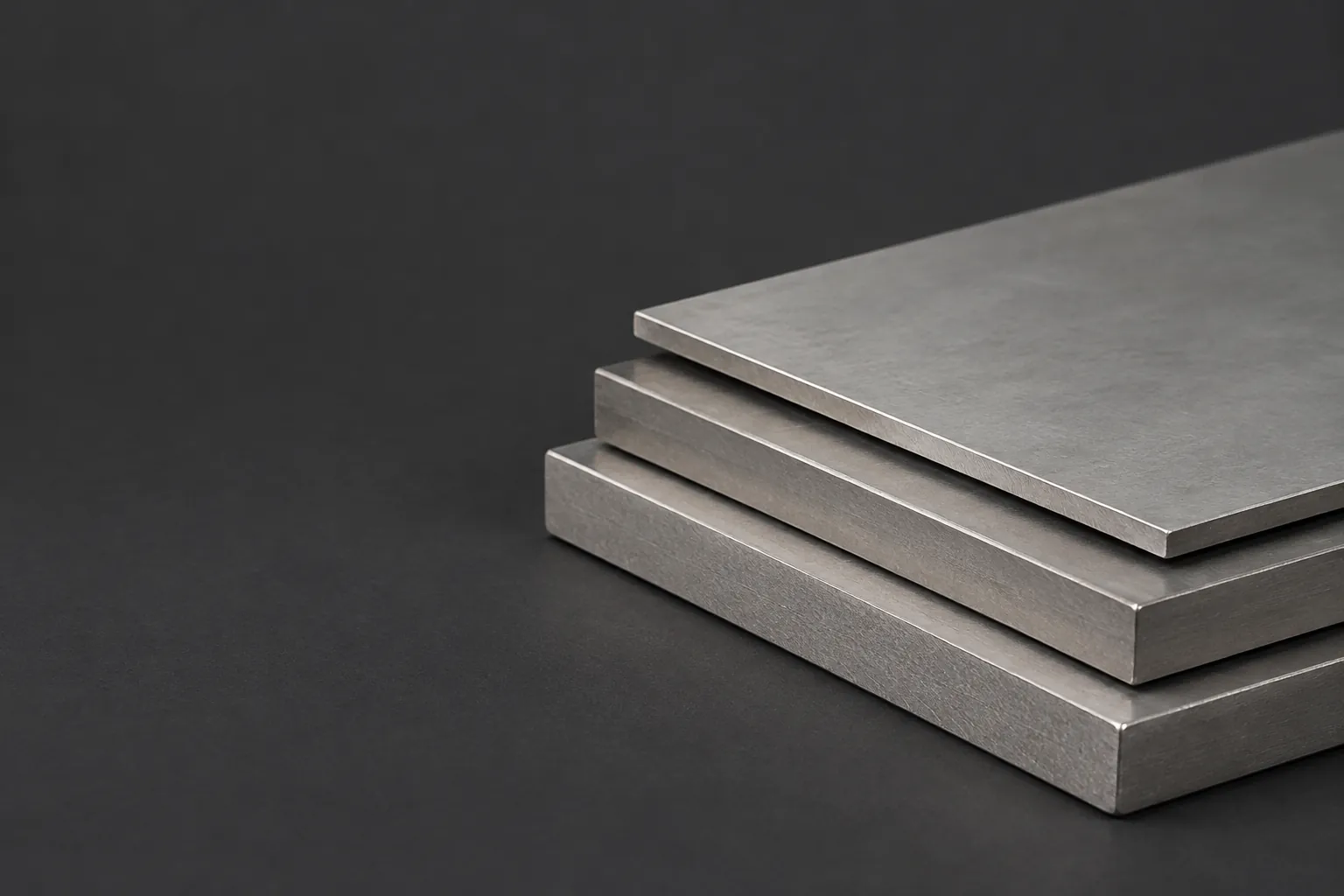
Nimonic 263 Nickel Alloy
Age-hardenable nickel alloy for fabricated high-temperature components | UNS N07263 | W.Nr. 2.4650
Nimonic 263 is a precipitation-hardenable nickel-cobalt-chromium-molybdenum alloy with titanium and aluminium strengthening additions. It combines annealed-sheet formability and welding capability with high-temperature strength after ageing.
NIMONIC® alloy 263 combines annealed-sheet formability and weldability with strength after solution treatment and ageing.
NIMONIC® is a trademark of the Special Metals Corporation group of companies. Quest Engineering supplies materials to customer requirements and does not manufacture or own this alloy trademark.
Raw & semi-finished materials
Available material forms
Producer-supported forms; availability, dimensions and ordered specification require supplier confirmation. No Quest stockholding is implied.
- Bar and rod
- Billet for forging
- Extruded section
- Hot-rolled plate
- Hot- and cold-rolled sheet; cold-rolled strip
- Cold-worked tube
- Cold-drawn wire and filler wire
Material overview
Nimonic 263 Nickel Alloy
NIMONIC® alloy 263 combines annealed-sheet formability and weldability with strength after solution treatment and ageing.
- UNS N07263 / W.Nr. 2.4650. Air-melted nickel-base alloy described by the producer; AMS melting-route restrictions must be checked separately.
- Annealed sheet is the supported cold-forming condition. Aged bar and aged sheet have independently tabulated properties and must not be combined.
- NIMONIC is a trademark of the Special Metals Corporation group of companies.
Material specifications & designations
| Designation / standard | Scope / condition |
|---|---|
| UNS | N07263 |
| W.Nr. | 2.4650 |
| BS HR 10 | Bar, billet, forgings and parts; listing does not state condition |
| AECMA PrEN 2199 / 2201 | Bar; condition not stated |
| AECMA PrEN 2200 | Forgings; condition not stated |
| DIN 17752 / 17753 / 17754 | Rod and bar / wire / forgings; condition not stated |
| BS HR 206 | Plate, sheet and strip; condition not stated |
| AECMA PrEN 2203 / 2418 | Sheet and strip / plate; condition not stated |
| DIN 17750 | Plate, sheet and strip; condition not stated |
| AMS 5872G | Sheet, strip and plate; consumable electrode remelted or vacuum induction melted; solution heat treated (public SAE scope, December 2024). Foil appears in the title but requires full-standard verification. |
| BS HR 404 | Seamless tube; condition not stated |
| AECMA PrEN 2202 | Tube; condition not stated |
| DIN 17751 | Pipe and tube; condition not stated |
| DIN 17744 | Composition only |
| AMS 5886E | Bars, forgings, flash-welded rings and stock for them; consumable electrode or vacuum induction melted; 1149°C solution heat treated (public SAE scope, March 2026). |
Historical producer coverage list, not confirmation of current revisions or equivalence. SAE abstract details and outstanding limitations are in certification. Reference associations only: no equivalence, stock availability, aerospace approval or certified conformity is established by this page. Specify the ordered revision, product form, dimensions, manufacture/melt route, delivery condition and acceptance tests; obtain matching supplier confirmation and inspection documents.
Specification review
Technical verification requirements
Specifications / product form
Producer listings and historic references support alloy association but not every listed standard’s current revision, individual form, section-size, melt-route, heat-treatment tolerances or acceptance requirements. Existing qualification wording is appropriate, not proof of conformity.
Obtain controlled ordered-standard and producer confirmation before technical release.
Engineering reference
Technical data
| Element | Minimum mass % | Maximum mass % |
|---|---|---|
| Carbon | 0.04 | 0.08 |
| Silicon | — | 0.40 |
| Manganese | — | 0.60 |
| Sulphur | — | 0.007 |
| Silver | — | 0.0005 |
| Aluminium | — | 0.60 |
| Boron | — | 0.005 |
| Bismuth | — | 0.0001 |
| Cobalt | 19.0 | 21.0 |
| Chromium | 19.0 | 21.0 |
| Copper | — | 0.20 |
| Iron | — | 0.7 |
| Molybdenum | 5.6 | 6.1 |
| Lead | — | 0.0020 |
| Titanium | 1.9 | 2.4 |
| Aluminium + Titanium | 2.4 | 2.8 |
| Nickel | Balance | Balance |
All limits from one producer source. Al + Ti is an additional combined constraint. Nickel balance means nickel predominates; it does not exclude minimal quantities of other elements.
| Property | Value | Basis |
|---|---|---|
| Density | 8360 kg/m³ | Temperature not specified; mean sheet/forged material |
| Specific heat | Approximately 461 J/(kg·K) | 20–100°C |
| Solidus | 1300°C | Accuracy +0/−10°C |
| Liquidus | 1355°C | Accuracy ±5°C |
| Electrical resistivity | 1.15 × 10⁻⁶ Ω·m | 20°C |
| Dynamic Young’s modulus, extruded/forged section | 224 GPa | 20°C; fully heat treated |
| Dynamic Young’s modulus, sheet | 221 GPa | 20°C; fully heat treated |
| Dynamic torsional modulus, sheet | 86 GPa | 20°C; fully heat treated |
| Thermal conductivity | 11.72 W/(m·K) | 20°C; calculated from electrical resistance of fully heat-treated sheet |
| Thermal conductivity | 12.98 W/(m·K) | 100°C; calculated from electrical resistance of fully heat-treated sheet |
| Thermal conductivity | 14.65 W/(m·K) | 200°C; calculated from electrical resistance of fully heat-treated sheet |
| Thermal conductivity | 16.33 W/(m·K) | 300°C; calculated from electrical resistance of fully heat-treated sheet |
| Thermal conductivity | 18 W/(m·K) | 400°C; calculated from electrical resistance of fully heat-treated sheet |
| Thermal conductivity | 19.68 W/(m·K) | 500°C; calculated from electrical resistance of fully heat-treated sheet |
| Thermal conductivity | 21.35 W/(m·K) | 600°C; calculated from electrical resistance of fully heat-treated sheet |
| Thermal conductivity | 23.03 W/(m·K) | 700°C; calculated from electrical resistance of fully heat-treated sheet |
| Thermal conductivity | 24.7 W/(m·K) | 800°C; calculated from electrical resistance of fully heat-treated sheet |
| Thermal conductivity | 26.8 W/(m·K) | 900°C; calculated from electrical resistance of fully heat-treated sheet |
| Thermal conductivity | 28.47 W/(m·K) | 1000°C; calculated from electrical resistance of fully heat-treated sheet |
| Mean linear thermal expansion | 10.3 / 10.2 / 11 × 10⁻⁶ K⁻¹ | 20–100°C; extruded bar / forged billet slices / sheet |
| Mean linear thermal expansion | 11.9 / 12.1 / 12.1 × 10⁻⁶ K⁻¹ | 20–200°C; extruded bar / forged billet slices / sheet |
| Mean linear thermal expansion | 12.5 / 12.8 / 12.6 × 10⁻⁶ K⁻¹ | 20–300°C; extruded bar / forged billet slices / sheet |
| Mean linear thermal expansion | 13.1 / 13.3 / 13 × 10⁻⁶ K⁻¹ | 20–400°C; extruded bar / forged billet slices / sheet |
| Mean linear thermal expansion | 13.6 / 13.9 / 13.4 × 10⁻⁶ K⁻¹ | 20–500°C; extruded bar / forged billet slices / sheet |
| Mean linear thermal expansion | 14.2 / 14.5 / 13.9 × 10⁻⁶ K⁻¹ | 20–600°C; extruded bar / forged billet slices / sheet |
| Mean linear thermal expansion | 15.2 / 15.7 / 14.6 × 10⁻⁶ K⁻¹ | 20–700°C; extruded bar / forged billet slices / sheet |
| Mean linear thermal expansion | 16.2 / 16.7 / 15.3 × 10⁻⁶ K⁻¹ | 20–800°C; extruded bar / forged billet slices / sheet |
| Mean linear thermal expansion | 17.9 / 18.3 / 16.5 × 10⁻⁶ K⁻¹ | 20–900°C; extruded bar / forged billet slices / sheet |
| Mean linear thermal expansion | 18.9 / 19.3 / 17.4 × 10⁻⁶ K⁻¹ | 20–1000°C; extruded bar / forged billet slices / sheet |
Dynamic moduli are not static design values. Density test temperature not stated. Full source series retained in research; source sheet Young’s modulus at 500°C is anomalous and is not silently corrected.
Annealed sheet
| Property | Value | Basis |
|---|---|---|
| Tensile strength | 788 MPa | 0.5–1.2 mm sheet |
| 0.1% proof stress | 343 MPa | |
| 0.2% proof stress | 355 MPa | |
| 0.5% proof stress | 369 MPa | |
| Elongation | 59.7% | 50 mm gauge length |
| Hardness | 195 HV | Load not reported |
Average cold-forming properties after 3 min at 1190°C followed by fluidized-bed quenching. Room-temperature context; exact test temperature not stated. Reduction of area not reported. Do not transfer these values to aged sheet or bar. Representative producer data, not guaranteed acceptance minima.
Solution-treated and aged bar
| Property | Value | Basis |
|---|---|---|
| Tensile strength | 1004 MPa | 20°C |
| 0.2% proof stress | 585 MPa | 20°C |
| Elongation | 45% | 5.65√S₀ gauge length |
| Reduction of area | 41% | 20°C |
Extruded section subsequently forged; 2 h at 1150°C, water quench, then 8 h at 800°C, air cool. Hardness not tabulated. Representative producer data, not guaranteed acceptance minima.
Solution-treated and aged sheet
| Property | Value | Basis |
|---|---|---|
| Tensile strength | 973 MPa | 20°C |
| 0.2% proof stress | 580 MPa | 20°C |
| Elongation | 39% | 50 mm gauge length |
Cold-rolled sheet 0.7–1.2 mm; 3–10 min at 1150°C, fluidized-bed or water quench, then 8 h at 800°C, air cool. Hardness and reduction of area not tabulated. Representative producer data, not guaranteed acceptance minima.
Producer tabulations only; bar and sheet conditions remain separate. No graph estimates.
Bar tensile properties — solution treated and aged
| Temperature (°C) | 0.2% proof (MPa) | UTS (MPa) | Elongation (%) | Reduction of area (%) |
|---|---|---|---|---|
| 20 | 585 | 1004 | 45 | 41 |
| 100 | 550 | 958 | 44 | 44 |
| 200 | 520 | 911 | 44 | 47 |
| 300 | 505 | 880 | 45 | 50 |
| 400 | 490 | 849 | 46 | 51 |
| 500 | 500 | 834 | 46 | 52 |
| 600 | 490 | 819 | 43 | 50 |
| 700 | 495 | 772 | 27 | 34 |
| 800 | 460 | 587 | 15 | 26 |
| 900 | 145 | 232 | 34 | 58 |
| 1000 | 70 | 108 | 69 | 72 |
Extruded section subsequently forged; 2 h/1150°C/water quench + 8 h/800°C/air cool. Elongation gauge 5.65√S₀. Strain rate to proof: 0.005/min at room temperature, 0.002/min elevated; 0.01/min thereafter. Representative producer data; not guaranteed specification limits.
Cold-rolled sheet tensile properties — solution treated and aged
| Temperature (°C) | 0.2% proof (MPa) | UTS (MPa) | Elongation (%) |
|---|---|---|---|
| 20 | 580 | 973 | 39 |
| 100 | 515 | 896 | 40 |
| 200 | 500 | 849 | 41 |
| 300 | 475 | 834 | 42 |
| 400 | 470 | 816 | 43 |
| 500 | 490 | 803 | 43 |
| 600 | 490 | 788 | 41 |
| 700 | 475 | 757 | 23 |
| 800 | 440 | 556 | 20 |
| 900 | 135 | 201 | 49 |
| 1000 | 70 | 108 | 65 |
0.7–1.2 mm sheet; 3–10 min/1150°C/fluidized-bed or water quench + 8 h/800°C/air cool. Elongation gauge 50 mm. Strain rates as Table 6. Representative producer data; not guaranteed specification limits.
Plain and autogenously welded sheet at 780°C
| Statistic | Plain UTS (MPa) | Plain elongation (%) | Welded UTS (MPa) | Welded elongation (%) |
|---|---|---|---|---|
| Mean | 632 | 24.0 | 629 | 11.7 |
| Standard deviation | 23 | 6.5 | 23 | 4.6 |
| MSRR 7036 minimum requirement | 541 | 9 | 463 | 5 |
100 casts; 0.9 and 1.2 mm cold-rolled sheet; 5 min/1150°C/air cool, weld, 8 h/800°C/air cool. Argon-arc autogenous butt weld. Elongation gauge 25 mm; strain rate 0.002/min to proof, 0.1/min thereafter. Requirements are MSRR-specific, not AMS minima. Representative producer data; not guaranteed specification limits.
Extruded section creep rupture
| Temperature (°C) | 30 h (MPa) | 100 h (MPa) | 300 h (MPa) | 1000 h (MPa) | 3000 h (MPa) |
|---|---|---|---|---|---|
| 550 | Not used: extrapolated | 695 | 680 | 633 | Not used: extrapolated |
| 600 | 641 | 618 | 595 | 556 | Not used: extrapolated |
| 650 | Withheld: source anomaly | 541 | 510 | 471 | Not used: extrapolated |
| 700 | 510 | 448 | 386 | 317 | Not used: extrapolated |
| 750 | 378 | 317 | 263 | 224 | Not used: extrapolated |
| 800 | 263 | 216 | 178 | 142 | Not used: extrapolated |
| 850 | 165 | 133 | 103 | 77 | Not used: extrapolated |
| 900 | 86 | 74 | 54 | 42 | Not used: extrapolated |
Stress to rupture; 2 h/1150°C/water quench + 8 h/800°C/air cool. Producer-extrapolated values and the anomalous 650°C/30 h entry are withheld; no graph values inferred. Representative producer data; not guaranteed specification limits.
Cold-rolled sheet creep rupture
| Temperature / cast | 30 h (MPa) | 100 h (MPa) | 300 h (MPa) | 1000 h (MPa) | 3000 h (MPa) | 5000 h (MPa) |
|---|---|---|---|---|---|---|
| 550°C | 803 | 757 | 710 | 672 | Not used: extrapolated | — |
| 600°C | 656 | 625 | 595 | 564 | Not used: extrapolated | — |
| 650°C | 595 | 556 | 510 | 448 | Not used: extrapolated | — |
| 700°C / first cast | 479 | 402 | 340 | 286 | Not used: extrapolated | — |
| 700°C / second cast | — | 363 | 317 | 263 | 216 | 201 |
| 750°C | — | 270 | 224 | 185 | 147 | 131 |
| 800°C | — | 181 | 147 | 116 | 83 | 73 |
| 850°C | — | 103 | 79 | 60 | 46 | 42 |
| 900°C | — | 57 | 46 | 36 | <31 | <31 |
Stress to rupture; 3–10 min/1150°C/fluidized-bed or water quench + 8 h/800°C/air cool. Two casts at 700°C are separate datasets. Producer-extrapolated values and the anomalous 650°C/30 h entry are withheld; no graph values inferred. Representative producer data; not guaranteed specification limits.
Oxidation performance
- No quantitative oxidation test data or universal oxidation-service temperature established in the producer bulletin.
Representative producer data, not design allowables. Extrapolated and anomalous rupture entries are withheld. Operating suitability depends on stress, temperature, exposure duration, atmosphere and service life. Suitability depends on stress, temperature, exposure duration, atmosphere and required service life; test temperatures are not universal service ratings.
Extruded or forged bars and section
1½–2½ h at 1150°C, water quench; then 8 h at 800°C, air cool. For forging and/or machining stock.
Hot-rolled sheet
½ h at 1150°C, water quench or air cool; water quench recommended. Then 8 h at 800°C, air cool.
Cold-rolled sheet and cold-drawn section including tube
3–10 min at 1150°C, fluidized-bed or water quench; then 8 h at 800°C, air cool.
Interstage sheet annealing
15 min at 1050–1100°C; rapid cooling, water quench for heavier sheet or air cool for thin sheet. Fluidized-bed quench also permitted.
Bar/heavy-section softening
2 h at 1150°C, water quench.
Weld fabrication
Weld in solution-treated condition; 8 h at 800°C, air cool may then be applied. For salvage welding of aged assemblies, pre-weld heat treatment is not necessary per producer; subsequent ageing is desirable.
Normally carried out in air. Solution time depends on section thickness. Fluidized-bed quenching reduces sheet distortion. The 1190°C annealed-sheet property-table treatment is not the general recommended 1150°C solution schedule. Service ageing occurs above 750°C.
Material selection
Corrosion resistance & performance
The reviewed bulletin does not establish quantitative aqueous-corrosion or oxidation performance. Confirm environmental suitability for each application; heat-treatment and test temperatures are not service ratings.
Typical applications
Engineering applications
- Fabricated high-temperature sheet and welded assemblies designed for proof stress and creep strength.
- Combustion-chamber components joined by flash-butt welding.
Subsequent manufacturing
Machining & processing
Forming
Hot working range 950–1150°C. Annealed 0.5–1.2 mm sheet is supported by a cold-forming table; Erichsen value 12.8 mm after 3 min/1190°C/fluidized-bed quench. Do not use aged-bar data as sheet forming data.
TIG and MIG welding
Readily welded by manual/automatic TIG and MIG. Automatic TIG butt joints below 1.6 mm may be autogenous; above 1.6 mm filler is required. Automatic TIG limit around 3.25 mm; manual TIG for complex or thicker joints. MIG normally used above 4.8 mm for speed.
Filler and shielding
Use matching NIMONIC filler metal 263. Pure argon or argon with 5% hydrogen; do not use argon–oxygen mixtures or carbon dioxide. Producer reports no HAZ cracking; dip MIG transfer preferred, although spray can be used. Procedure qualification remains necessary.
Other joining
Resistance spot, stitch and seam welding are established producer-listed processes. Flash-butt welding is used for combustion-chamber components; brazing is also possible.
Machining, finishing and inspection
Choose material condition and machining allowance for the component. Allow for work hardening and heat-treatment distortion; qualify tools, coolant, finish and inspection requirements for the actual product. No universal cutting speed is established by the cited bulletin.
Material certification & testing
Certification and inspection options are subject to customer requirements and supplier confirmation.
Conformity must be demonstrated against the ordered specification, form and condition. Tests are not automatic; agree scope, acceptance criteria and documentation before ordering.
- EN 10204 3.1 material certificates
- Certificates of Conformity
- Heat/batch traceability
- Chemical analysis
- Mechanical testing
- Heat-treatment records
- Hardness testing
- Positive Material Identification (PMI)
- Ultrasonic testing where applicable
- Additional aerospace or customer-specific inspection requirements
Material enquiry
Request a material quotation
Nimonic 263 Nickel Alloy supplied to your material form, dimensions and specification.