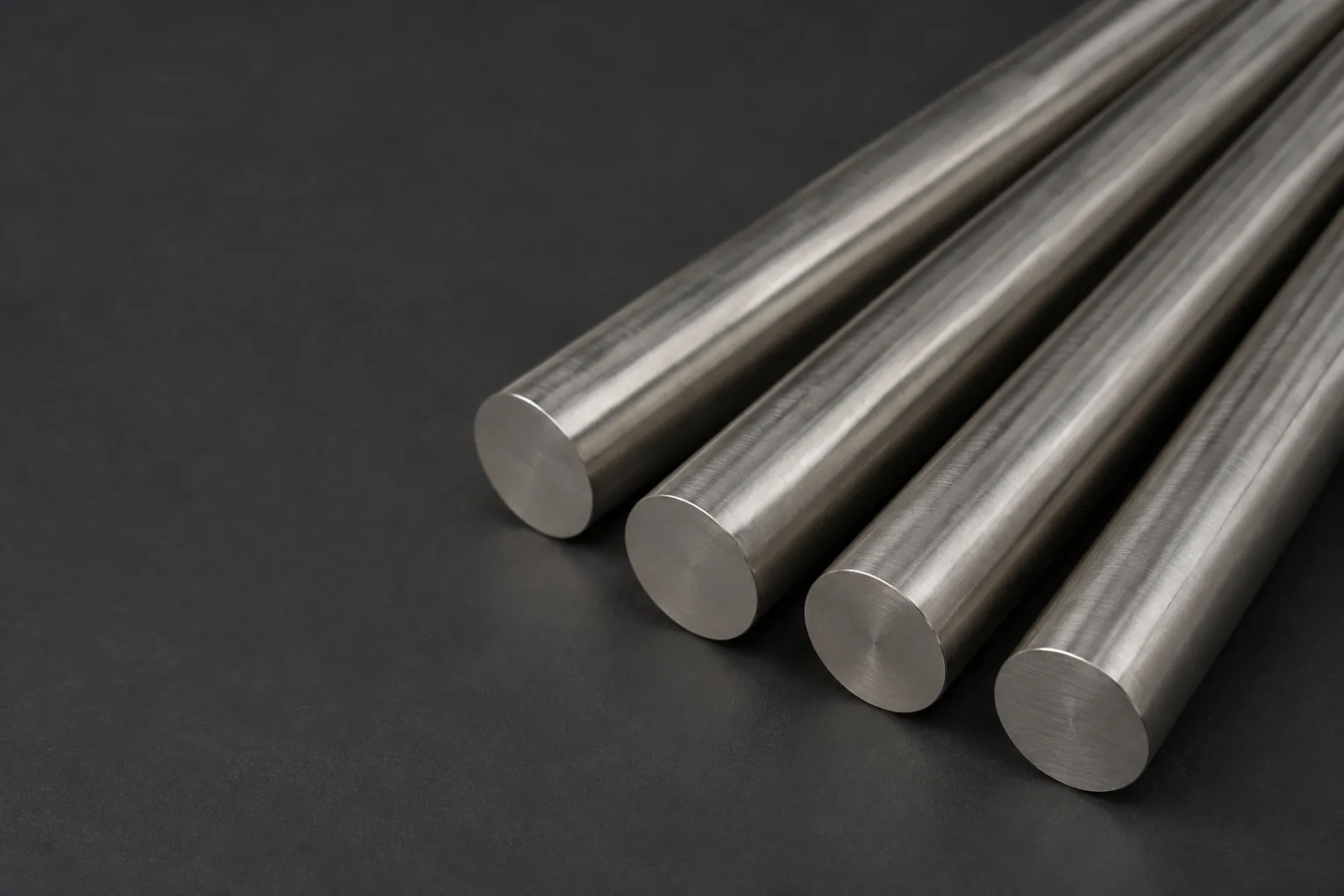
Materials Supply / Nickel, Cobalt & High-Temperature Alloys
Haynes 282 Nickel Superalloy
Gamma-prime precipitation strengthened | UNS N07208
Precipitation-strengthened nickel superalloy developing ordered Ni3Al gamma-prime during ageing, with creep strength, weldability and thermal stability.
HAYNES® and 282® are registered trademarks of Haynes International, Inc. Quest Engineering does not manufacture or own the alloy trademark.
Raw & semi-finished materials
Available material forms
Producer-supported product forms; availability is subject to ordered specification, dimensions and supplier confirmation. No Quest Engineering stockholding is implied.
- Sheet
- Strip
- Plate
- Bar
- Forging stock
- Wire
- Seamless and welded pipe/tube
Material overview
Haynes 282 Nickel Superalloy
Precipitation-strengthened nickel superalloy developing ordered Ni3Al gamma-prime during ageing, with creep strength, weldability and thermal stability.
- Precipitation-strengthened nickel superalloy developing ordered Ni3Al gamma-prime during ageing, with creep strength, weldability and thermal stability.
- Numeric tables are restricted to retrieved official published values; unverified properties are explicitly unsupported. Nominal chemistry is not a purchase acceptance specification.
Designations and product specifications
| Designation / standard | Scope / status |
|---|---|
| UNS | N07208 |
| AMS 5951 | Sheet, plate and strip; producer-listed reference |
| AMS 5915 | Bar / billet and forgings; producer-listed reference |
| ASTM B637 | Producer-listed bar and forging reference; full grade limits require verification |
Producer listing, not a claim of current edition or equivalence. No Werkstoff number verified. Reference associations only: no equivalence, stock availability, aerospace approval or certified conformity is established by this page. Specify the ordered revision, product form, dimensions, manufacture/melt route, delivery condition and acceptance tests; obtain matching supplier confirmation and inspection documents.
Specification review
Technical verification requirements
Specifications / product form
Producer listings and historic references support alloy association but not every listed standard’s current revision, individual form, section-size, melt-route, heat-treatment tolerances or acceptance requirements. Existing qualification wording is appropriate, not proof of conformity.
Obtain controlled ordered-standard and producer confirmation before technical release.
Heat treatment / source access
The cited live producer principal-features page returned HTTP 403. Archived producer-authored brochure is accessible and provides independent support, but the live citation cannot be called freshly verified or current.
Associate schedule with accessible brochure and exact section after technical review; obtain current producer issue confirmation.
Engineering reference
Technical data
| Element | Mass % | Basis |
|---|---|---|
| Ni | 57 | Balance (approximate nominal Ni) |
| Cr | 20 | Nominal |
| Co | 10 | Nominal |
| Mo | 8.5 | Nominal |
| Ti | 2.1 | Nominal |
| Al | 1.5 | Nominal |
| Fe | 1.5 | Maximum |
| Mn | 0.3 | Maximum |
| Si | 0.15 | Maximum |
| C | 0.06 | Nominal |
| B | 0.005 | Nominal |
One complete producer nominal-composition table; only expressly marked maxima are limits. No minimum or unlisted residual limits inferred; not a controlled full-standard chemistry.
| Property | Temperature / interval (°C unless RT) | Value | Unit |
|---|---|---|---|
| Density — solution annealed | Not specified | 8270 | kg/m³ (8.27 g/cm³ × 1000) |
| Density — age hardened | Not specified | 8290 | kg/m³ (8.29 g/cm³ × 1000) |
| Melting range | Interval | 1300–1375 | °C |
| Gamma-prime solvus | Phase temperature | 997 | °C |
| Specific heat | RT | 436 | J/(kg·K) |
| Specific heat | 100 | 463 | J/(kg·K) |
| Specific heat | 200 | 494 | J/(kg·K) |
| Specific heat | 300 | 522 | J/(kg·K) |
| Specific heat | 400 | 544 | J/(kg·K) |
| Specific heat | 500 | 563 | J/(kg·K) |
| Specific heat | 600 | 581 | J/(kg·K) |
| Specific heat | 700 | 594 | J/(kg·K) |
| Specific heat | 800 | 650 | J/(kg·K) |
| Specific heat | 900 | 668 | J/(kg·K) |
| Specific heat | 1000 | 676 | J/(kg·K) |
| Thermal conductivity | RT | 10.3 | W/(m·K) |
| Thermal conductivity | 100 | 12 | W/(m·K) |
| Thermal conductivity | 200 | 14.1 | W/(m·K) |
| Thermal conductivity | 300 | 16.3 | W/(m·K) |
| Thermal conductivity | 400 | 18.5 | W/(m·K) |
| Thermal conductivity | 500 | 20.5 | W/(m·K) |
| Thermal conductivity | 600 | 22.6 | W/(m·K) |
| Thermal conductivity | 700 | 24.8 | W/(m·K) |
| Thermal conductivity | 800 | 26.1 | W/(m·K) |
| Thermal conductivity | 900 | 27.3 | W/(m·K) |
| Thermal conductivity | 1000 | 28.9 | W/(m·K) |
| Dynamic elastic modulus | RT | 217 | GPa |
| Dynamic elastic modulus | 100 | 213 | GPa |
| Dynamic elastic modulus | 200 | 209 | GPa |
| Dynamic elastic modulus | 300 | 202 | GPa |
| Dynamic elastic modulus | 400 | 196 | GPa |
| Dynamic elastic modulus | 500 | 190 | GPa |
| Dynamic elastic modulus | 600 | 183 | GPa |
| Dynamic elastic modulus | 700 | 175 | GPa |
| Dynamic elastic modulus | 800 | 166 | GPa |
| Dynamic elastic modulus | 900 | 154 | GPa |
| Dynamic elastic modulus | 1000 | 140 | GPa |
| Dynamic shear modulus | RT | 82 | GPa |
| Dynamic shear modulus | 100 | 80 | GPa |
| Dynamic shear modulus | 200 | 78 | GPa |
| Dynamic shear modulus | 300 | 76 | GPa |
| Dynamic shear modulus | 400 | 73 | GPa |
| Dynamic shear modulus | 500 | 71 | GPa |
| Dynamic shear modulus | 600 | 68 | GPa |
| Dynamic shear modulus | 700 | 65 | GPa |
| Dynamic shear modulus | 800 | 61 | GPa |
| Dynamic shear modulus | 900 | 57 | GPa |
| Dynamic shear modulus | 1000 | 51 | GPa |
| Poisson ratio | RT | 0.319 | 1 |
| Poisson ratio | 100 | 0.326 | 1 |
| Poisson ratio | 200 | 0.335 | 1 |
| Poisson ratio | 300 | 0.335 | 1 |
| Poisson ratio | 400 | 0.337 | 1 |
| Poisson ratio | 500 | 0.341 | 1 |
| Poisson ratio | 600 | 0.346 | 1 |
| Poisson ratio | 700 | 0.352 | 1 |
| Poisson ratio | 800 | 0.355 | 1 |
| Poisson ratio | 900 | 0.357 | 1 |
| Poisson ratio | 1000 | 0.363 | 1 |
| Mean thermal expansion | RT–100 | 12.1 | 10⁻⁶/K |
| Mean thermal expansion | RT–200 | 12.4 | 10⁻⁶/K |
| Mean thermal expansion | RT–300 | 12.8 | 10⁻⁶/K |
| Mean thermal expansion | RT–400 | 13.1 | 10⁻⁶/K |
| Mean thermal expansion | RT–500 | 13.5 | 10⁻⁶/K |
| Mean thermal expansion | RT–600 | 13.7 | 10⁻⁶/K |
| Mean thermal expansion | RT–700 | 14.2 | 10⁻⁶/K |
| Mean thermal expansion | RT–800 | 14.9 | 10⁻⁶/K |
| Mean thermal expansion | RT–900 | 15.9 | 10⁻⁶/K |
| Mean thermal expansion | RT–1000 | 16.9 | 10⁻⁶/K |
| Thermal diffusivity | RT | 2.88 | 10⁻⁶ m²/s |
| Thermal diffusivity | 100 | 3.15 | 10⁻⁶ m²/s |
| Thermal diffusivity | 200 | 3.48 | 10⁻⁶ m²/s |
| Thermal diffusivity | 300 | 3.81 | 10⁻⁶ m²/s |
| Thermal diffusivity | 400 | 4.13 | 10⁻⁶ m²/s |
| Thermal diffusivity | 500 | 4.44 | 10⁻⁶ m²/s |
| Thermal diffusivity | 600 | 4.73 | 10⁻⁶ m²/s |
| Thermal diffusivity | 700 | 5.09 | 10⁻⁶ m²/s |
| Thermal diffusivity | 800 | 4.88 | 10⁻⁶ m²/s |
| Thermal diffusivity | 900 | 4.98 | 10⁻⁶ m²/s |
| Thermal diffusivity | 1000 | 5.21 | 10⁻⁶ m²/s |
| Electrical resistivity | RT | 1.261 | µΩ·m |
| Electrical resistivity | 100 | 1.278 | µΩ·m |
| Electrical resistivity | 200 | 1.299 | µΩ·m |
| Electrical resistivity | 300 | 1.318 | µΩ·m |
| Electrical resistivity | 400 | 1.334 | µΩ·m |
| Electrical resistivity | 500 | 1.35 | µΩ·m |
| Electrical resistivity | 600 | 1.362 | µΩ·m |
| Electrical resistivity | 700 | 1.355 | µΩ·m |
| Electrical resistivity | 800 | 1.345 | µΩ·m |
| Electrical resistivity | 900 | 1.326 | µΩ·m |
| Electrical resistivity | 1000 | 1.299 | µΩ·m |
Age hardened 1010°C/2h/AC + 788°C/8h/AC except expressly solution-annealed density. RT numerical value unspecified. Mean expansion tabulated against endpoint; reference described as RT here, not assumed 20/25°C. Diffusivity converted from cm²/s and resistivity from µΩ·cm; use metric temperature columns independently of British rows.
Sheet — solution annealed and standard two-step aged
| Property | Typical value |
|---|---|
| Ultimate tensile strength | 1132 MPa |
| 0.2% yield strength | 699 MPa |
| Elongation | 30% |
| Hardness | 30 HRC |
| Reduction of area | Not tabulated |
Solution anneal 1149°C + 1010°C/2h/AC + 788°C/8h/AC; hardness from separate form-specific table p9, not same test heat. RT not assigned a numerical temperature. Typical producer values, not specification minima or design allowables; confirm ordered condition, section limits, specimen requirements and gauge length where not stated.
Plate — solution annealed and standard two-step aged
| Property | Typical value |
|---|---|
| Ultimate tensile strength | 1147 MPa |
| 0.2% yield strength | 715 MPa |
| Elongation | 30% |
| Hardness | 32 HRC |
| Reduction of area | Not tabulated |
Solution anneal 1135°C + 1010°C/2h/AC + 788°C/8h/AC; hardness from separate form-specific table p9, not same test heat. RT not assigned a numerical temperature. Typical producer values, not specification minima or design allowables; confirm ordered condition, section limits, specimen requirements and gauge length where not stated.
Sheet — solution annealed (unaged)
| Property | Typical value |
|---|---|
| Ultimate tensile strength | 839 MPa |
| 0.2% yield strength | 384 MPa |
| Elongation | 59% |
| Hardness | 90 HRB |
| Reduction of area | Not tabulated |
Average values, independent of aged data. Annealing temperatures in p9 hardness footnote: sheet 1149°C; plate/bar 1135°C. No hold time given for these measured samples. Typical producer values, not specification minima or design allowables; confirm ordered condition, section limits, specimen requirements and gauge length where not stated.
Plate — solution annealed (unaged)
| Property | Typical value |
|---|---|
| Ultimate tensile strength | 830 MPa |
| 0.2% yield strength | 384 MPa |
| Elongation | 60% |
| Hardness | 93 HRB |
| Reduction of area | Not tabulated |
Average values, independent of aged data. Annealing temperatures in p9 hardness footnote: sheet 1149°C; plate/bar 1135°C. No hold time given for these measured samples. Typical producer values, not specification minima or design allowables; confirm ordered condition, section limits, specimen requirements and gauge length where not stated.
Bar — solution annealed (unaged)
| Property | Typical value |
|---|---|
| Ultimate tensile strength | 816 MPa |
| 0.2% yield strength | 348 MPa |
| Elongation | 62% |
| Hardness | 86 HRB |
| Reduction of area | Not tabulated |
Average values, independent of aged data. Annealing temperatures in p9 hardness footnote: sheet 1149°C; plate/bar 1135°C. No hold time given for these measured samples. Typical producer values, not specification minima or design allowables; confirm ordered condition, section limits, specimen requirements and gauge length where not stated.
Full published form-specific tensile and creep/rupture tables; no graph digitisation.
Sheet — elevated-temperature tensile
| Temperature (°C) | 0.2% yield (MPa) | UTS (MPa) | Elongation (%) |
|---|---|---|---|
| 538 | 632 | 960 | 36 |
| 649 | 631 | 1005 | 27 |
| 704 | 624 | 941 | 24 |
| 760 | 612 | 833 | 22 |
| 816 | 567 | 692 | 24 |
| 871 | 501 | 555 | 31 |
| 927 | 303 | 346 | 37 |
| 982 | 129 | 169 | 61 |
Solution anneal 1149°C + 1010°C/2h/AC + 788°C/8h/AC; hardness from separate form-specific table p9, not same test heat. RT not assigned a numerical temperature.
Plate — elevated-temperature tensile
| Temperature (°C) | 0.2% yield (MPa) | UTS (MPa) | Elongation (%) |
|---|---|---|---|
| 538 | 649 | 991 | 34 |
| 649 | 643 | 1048 | 31 |
| 704 | 649 | 978 | 29 |
| 760 | 628 | 856 | 22 |
| 816 | 575 | 709 | 28 |
| 871 | 507 | 566 | 31 |
| 927 | 310 | 359 | 50 |
| 982 | 132 | 174 | 71 |
Solution anneal 1135°C + 1010°C/2h/AC + 788°C/8h/AC; hardness from separate form-specific table p9, not same test heat. RT not assigned a numerical temperature.
Sheet — creep and stress rupture
| Temperature (°C) | Creep (%) / R = rupture | 100 h (MPa) | 1000 h (MPa) |
|---|---|---|---|
| 649 | 0.5 | - | 538 |
| 649 | 1 | - | 545 |
| 649 | Rupture | - | 552 |
| 704 | 0.5 | 483 | 352 |
| 704 | 1 | 496 | 365 |
| 704 | Rupture | 517 | 386 |
| 760 | 0.5 | 317 | 228 |
| 760 | 1 | 331 | 241 |
| 760 | Rupture | 386 | 262 |
| 816 | 0.5 | 207 | 124 |
| 816 | 1 | 221 | 145 |
| 816 | Rupture | Not adopted: printed 225; conflicts with 37 ksi and comparative table 255 MPa | 159 |
| 871 | 0.5 | 117 | 62 |
| 871 | 1 | 124 | 69 |
| 871 | Rupture | 152 | 83 |
| 927 | 0.5 | 57 | 29 |
| 927 | 1 | 62 | 34 |
| 927 | Rupture | 83 | 41 |
| 982 | 0.5 | 25 | - |
| 982 | 1 | 29 | 12 |
| 982 | Rupture | 38 | Not adopted: printed 1; conflicts with 2.5 ksi |
Approximate initial stress, not design allowables. Solution anneal 1149°C + 1010°C/2h/AC + 788°C/8h/AC.
Plate — creep and stress rupture
| Temperature (°C) | Creep (%) / R = rupture | 100 h (MPa) | 1000 h (MPa) | 10000 h (MPa) |
|---|---|---|---|---|
| 649 | 0.5 | - | 558 | - |
| 649 | 1 | - | 565 | - |
| 649 | Rupture | - | 586 | 441 |
| 704 | 0.5 | 503 | 365 | - |
| 704 | 1 | 517 | 379 | - |
| 704 | Rupture | 552 | 421 | 310 |
| 760 | 0.5 | 338 | 241 | - |
| 760 | 1 | 345 | 248 | - |
| 760 | Rupture | 393 | 283 | 186 |
| 816 | 0.5 | 221 | 138 | - |
| 816 | 1 | 234 | 152 | - |
| 816 | Rupture | 262 | 172 | 97 |
| 871 | 0.5 | 124 | 76 | - |
| 871 | 1 | 131 | 83 | - |
| 871 | Rupture | 159 | 97 | 55 |
| 927 | 0.5 | 65 | 33 | - |
| 927 | 1 | 69 | 36 | - |
| 927 | Rupture | 90 | 48 | 26 |
| 982 | 0.5 | 29 | 12 | - |
| 982 | 1 | 32 | 14 | - |
| 982 | Rupture | 43 | 25 | - |
Approximate initial stress, not design allowables. Solution anneal 1135°C + 1010°C/2h/AC + 788°C/8h/AC.
Static oxidation in flowing air
| Temperature (°C) | Metal loss (µm) | Average metal affected (µm) |
|---|---|---|
| 871 | 5 | 15 |
| 927 | 3 | 28 |
| 982 | 5 | 46 |
1008 h; six 168-h cycles. Average metal affected = metal loss + average internal penetration. Product/treatment unspecified.
Burner-rig dynamic oxidation
| Temperature (°C) | Metal loss (µm) | Average metal affected (µm) |
|---|---|---|
| 871 | 46 | 107 |
| 982 | 203 | 330 |
1000 h, 30-min cycles; 2 parts No.1 / 1 part No.2 fuel oil; air:fuel ~50:1; ~0.3 Mach; fan cooled below 260°C. Product/treatment unspecified.
Oxidation performance
- Oxidation values are test-specific, not permissible metal loss or guaranteed life.
Published SI values retained without recalculation from rounded ksi. Suspect cells explicitly withheld. * denotes producer significant extrapolation where applicable. Suitability depends on loading, temperature, atmosphere, exposure duration and required service life. Test temperatures are not universal maximum service temperatures.
Solution annealing
1121–1149°C; supplied solution annealed for forming. Hold time and cooling not specified in retrieved principal-features text.
Standard two-step ageing
1010°C / 2 hours / air cool + 788°C / 8 hours / air cool after fabrication.
Solution annealing precedes the two-step ageing treatment; these are not interchangeable conditions. Form-specific producer tensile bases use 1149°C sheet and 1135°C plate, followed by the stated two-step ageing. No universal hold time, section limit or alternative code treatment is inferred. AC means air cool. Do not use this overview as a furnace work instruction or select a production route from conflicting source examples. A materials/process authority must approve the complete form- and condition-specific cycle, including precursor condition, section size, hold times, cooling and verification tests.
Material selection
Corrosion resistance & performance
The producer identifies high-temperature oxidation resistance as a material feature. Oxidation resistance is not a load-bearing strength rating or immunity to all corrosive environments.
Assess combustion gases, sulphur-bearing atmospheres and carburising conditions independently. Suitability depends on atmosphere, exposure duration, stress and required service life.
Typical applications
Engineering applications
- Gas turbine combustor components
- Industrial high-temperature components
- Aero and industrial gas turbine hot-section structural parts
- Advanced power-generation development; code-specific treatment required
Subsequent manufacturing
Machining & processing
Forming and heat treatment
Form in solution-annealed condition, then age. Slow gamma-prime precipitation assists ductility and resistance to strain-age cracking.
Joining
Producer reports good weldability; qualify welding and post-fabrication ageing for the part. Machinability is similar to Waspaloy.
Machining condition and tooling
Confirm the actual material condition before planning machining. Allow for work hardening; qualify tool material, rigidity, coolant and cutting engagement for the product. No universal speeds or feeds are specified.
Distortion, finishing and inspection
Agree machining allowance, final surface condition and dimensional inspection around heat treatment. Define surface and internal inspection, acceptance criteria and traceability to the ordered specification; additional testing is not automatic.
Material certification & testing
Certification and inspection options are subject to customer requirements and supplier confirmation.
Conformity must be demonstrated against the ordered specification, form and condition. Tests are not automatic; agree scope, acceptance criteria and documentation before ordering.
- EN 10204 3.1 material certificates
- Certificates of Conformity
- Heat/batch traceability
- Chemical analysis
- Mechanical testing
- Heat-treatment records
- Hardness testing
- Positive Material Identification (PMI)
- Ultrasonic testing where applicable
- Additional aerospace or customer-specific inspection requirements
Material enquiry
Request a material quotation
Haynes 282 Nickel Superalloy supplied to your material form, dimensions and specification.